
Little Bluestem (Schizachyrium scoparium)
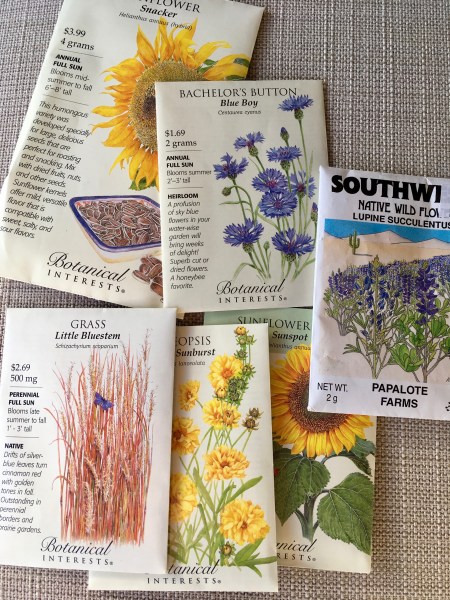
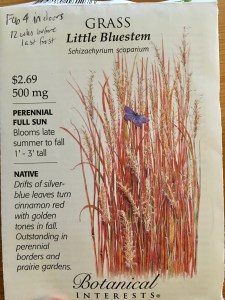 I read on Botanical Interests‘ site, the place I bought my seeds, that I should start little bluestem indoors 10-12 weeks before the last frost (April 29 in our area):
When to sow outside: 2 to 4 weeks before average last frost. Can be sown in the early fall so plants get established before winter and get an early start on spring.
When to start inside: 10 to 12 weeks before average last frost.
Special germination instructions: Germination may improve if seed receives a cold treatment. See inside of packet for detailed information.
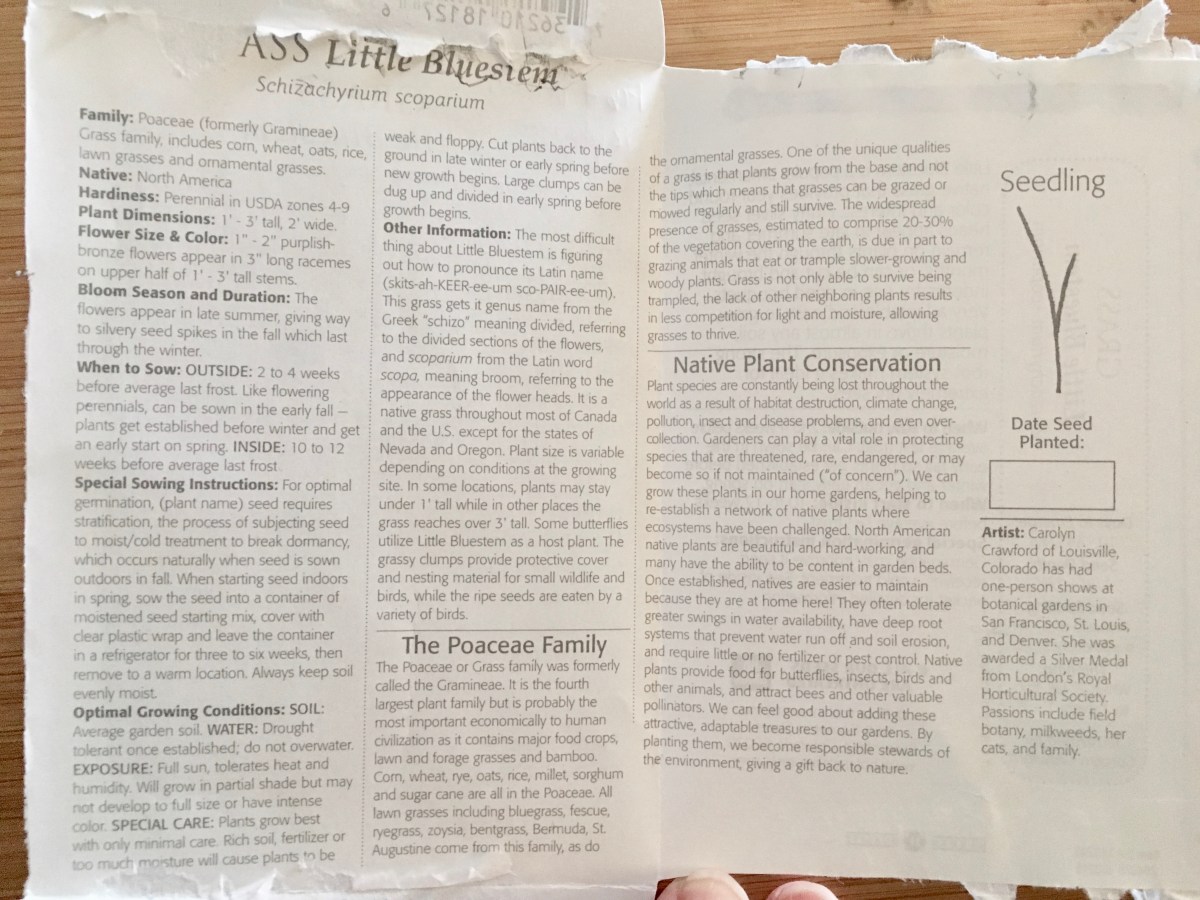
When I opened the packet for more information, I read that the seeds need stratification when started indoors in the spring:
When starting seed indoors in spring, sow the seed into a container of moistened seed starting mix, cover with clear plastic wrap and leave the container in a refrigerator for three to six weeks, then remove to a warm location. Always keep soil evenly moist.
I’m not sure how many to plant, though — if I want the grass to take up 1.5 feet in diameter, how many seeds do I plant and in how many pots?
Oh wait, on the packet it says:
Seed depth: 1/8″ – 1/4″
Seed spacing: a group of 4-6 seeds every 1′-2′
Thinning: when 2″ tall, thin to 1 every 1′-2′
So if I want 10 1′ clumps, I should probably start 12 small pots, each with 4 seeds. Okay, I think I’m good for bluestem.
Viola Johnny-Jump-Up
We don’t have a lot of shade on our property, which I love — more sun means more flowers. We do have a shady spot up on the hill though, and I thought it’d be fun to put some violets up there. Instructions for how to start Johnny-Jump-Up seeds are all over the place — some say they need stratification like mentioned above, some say to start them in a warm place — so I’m not sure what the best approach is. Since they are an early spring bloomer, I’m going to go with the cold treatment.
The seeds I bought are Burpee seeds, so I looked at Burpee’s instructions which read:
-
Sow indoors 8-12 weeks before the last heavy frost using a seed starting kit. Violas can take a light frost. They may also be started late summer for fall blooming.
-
Sow seeds thinly and evenly in seed starting formula. Cover completely as seeds need darkness to germinate; firm lightly and keep evenly moist.
-
Seedlings emerge in 10-14 days
-
As soon as seedlings emerge, provide plenty of light on a sunny windowsill or grow seedlings 3-4 inches beneath fluorescent plant lights turned on 16 hours per day, off for 8 hours at night. Raise the lights as the plants grow taller. Incandescent bulbs will not work for this process because they will get too hot. Most plants require a dark period to grow, do not leave lights on for 24 hours.
-
Thin to one seedling per cell when they have two sets of leaves.
-
Seedlings do not need much fertilizer, feed when they are 3-4 weeks old using a starter solution (half strength of a complete indoor houseplant food) according to manufacturer’s directions.
-
Transplant hardened-off seedlings to the garden after the heavy frost.
-
Before planting in the garden, seedling plants need to be “hardened off”. Accustom young plants to outdoor conditions by moving them to a sheltered place outside for a week. Be sure to protect them from wind and hot sun at first. If frost threatens at night, cover or bring containers indoors, then take them out again in the morning. This hardening off process toughens the plant’s cell structure and reduces transplant shock and scalding.




 Andrea's Gardening Blog