July 9: caterpillar, goldenrod, and new chair

Our son asked yesterday, “Are there any caterpillars in the garden yet?”


swallowtail caterpillar on rue july
Swallowtail caterpillar on rue

I’m only aware of one (other than a small crop of swallowtail caterpillars earlier in the spring on the rue), and I remember they were quite late last year as well. I want to keep better records this year of when I do things in the garden, and when caterpillars appear.

We were supposed to camp this weekend, but our car broke down and we stayed home instead. I’m relieved, honestly, because it’s been weeks since I’ve been home on a weekend and had a chance to enjoy the garden. I’ve spent the past couple of days cleaning things up and moving stuff around out there:

Butterfly/caterpillar/bird watch

  • One swallowtail caterpillar on rue.
  • No caterpillars (or aphids) on milkweed yet.
  • No monarch sightings.
  • Saw a swallowtail butterfly on the milkweed yesterday.
  • Saw a hummingbird drinking from the bee balm, despite the ragged state of the plants and flowers.
  • Saw a bird splash briefly in the bird bath in the evening.

Gardening update

  • My husband moved one of the adirondak chairs he made under the dogwood, and it’s amazing! I moved some phlox around to make room for the foot stool, and I brought the table over as well. I also moved some of the purple salvia from under the echinacea to over by my new perch.
  • Moved three goldenrods from under the tree out back to 1/ a sunnier spot in the back bed; 2/ the herb garden, next to the catnip; 3/ behind bee balm in hilltop bed
  • Planted two perennial tickseeds (Coreopsis “moonbeam”) in herb garden to add some yellow (there was too much lavender/purple without anything to pop it)
  • Applied rabbit repellant (cow’s blood, $21 for a spray bottle for which the sprayer broke after applying repellant to four plants) to the milkweed out back in the evening
  • Cut seed heads from rue
  • Deadheaded indigo salvia and yarrow
  • Weeded
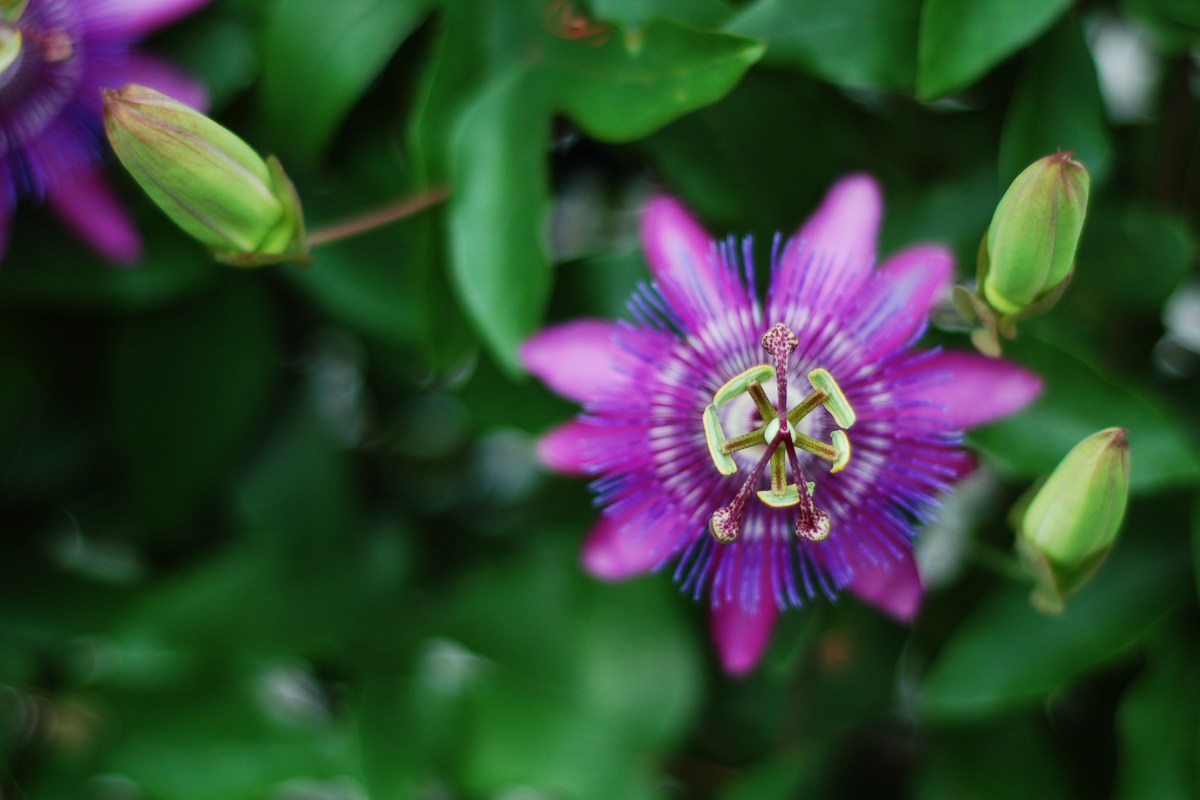
  • Dug up a passionflower volunteer and moved it to the trellis. It seemed to still be attached to the mother root, from which no new passionflower grew where it needed to grow. Not sure if the volunteer will make it after I ripped it away from the main root.
  • Trimmed bee balm to keep it out of the bird bath.
adirondak chair under dogwood
My new perch

Status of the garden: July

We’ve been away or I’ve been working the past few weekends, so I haven’t had a chance to spend much time in the garden. It’s a beautiful morning, though, and I took a few photos before starting work today.

The current status of the garden is: in bloom. In bloom and being eaten by bunnies.

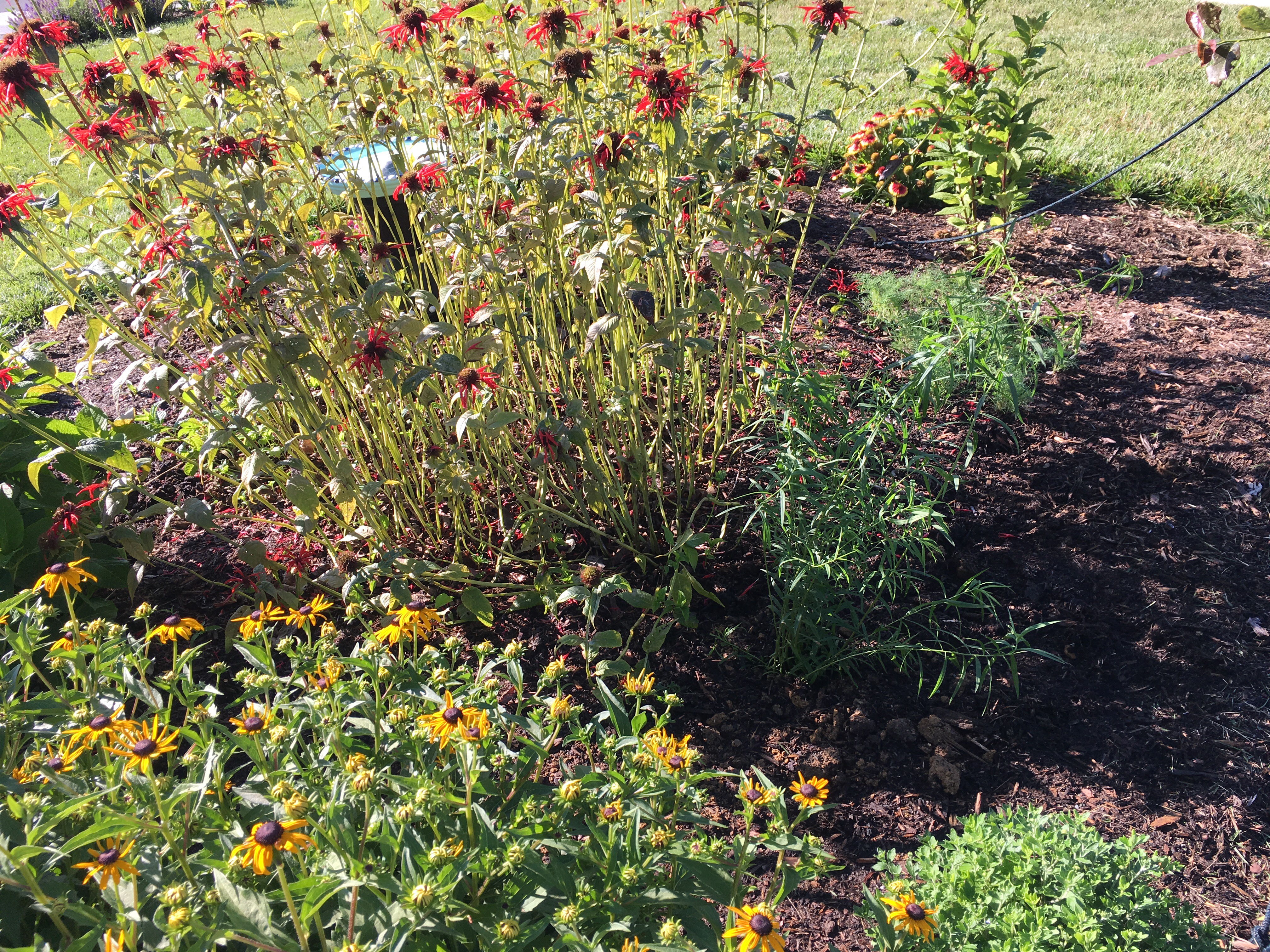
  • Echinacea, zinnias, milkweed, blanketflower, lavender, blazing star, black eyed Susans, bee balm, hydrangea by the stairs are all in bloom, and the yarrow is in its second round of blossoms.
  • Bee balm is past it’s peak and is looking pretty bad. We need something low and bushy in front of it to hide it’s legginess.
  • Joe Pye and Shasta daisies should bloom soon. I don’t see flower buds on the hilltop hydrangea.
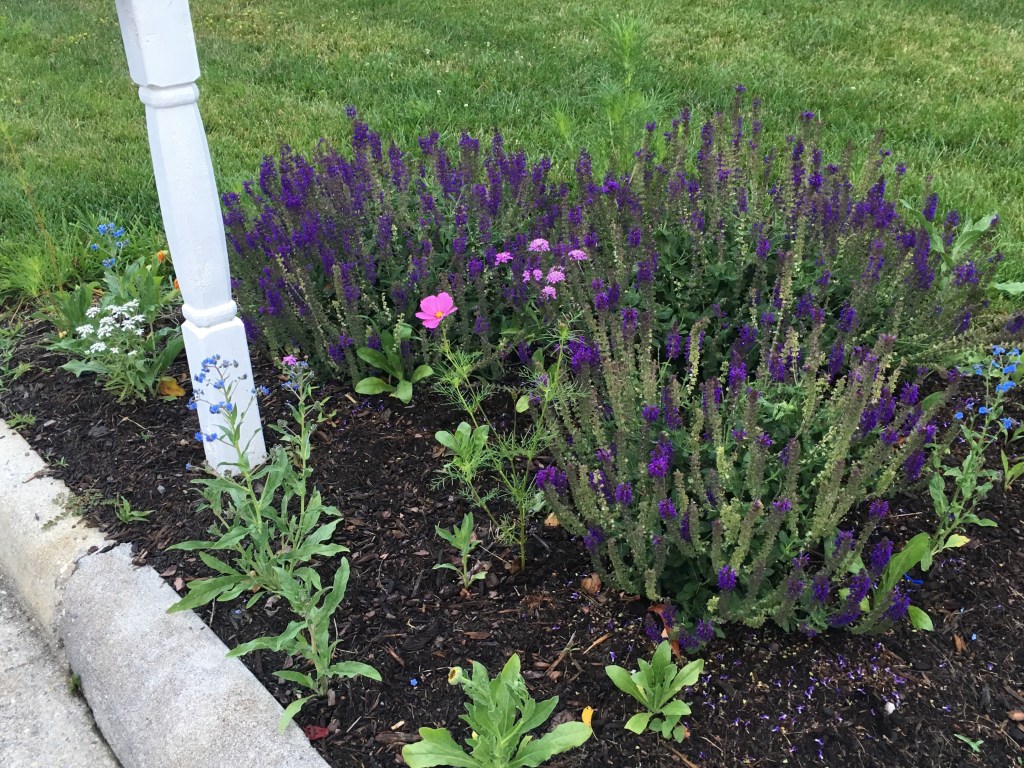
  • Mailbox wildflowers are doing great. Cosmos, candytuft, calendula, and a blue flower — maybe stock? — all blooming.
  • Bunnies ate the yellow milkweed in the back garden and also many of the wildflowers. The remaining wildflowers are slower going than out front. Calendula seems to be doing well.
img_2135
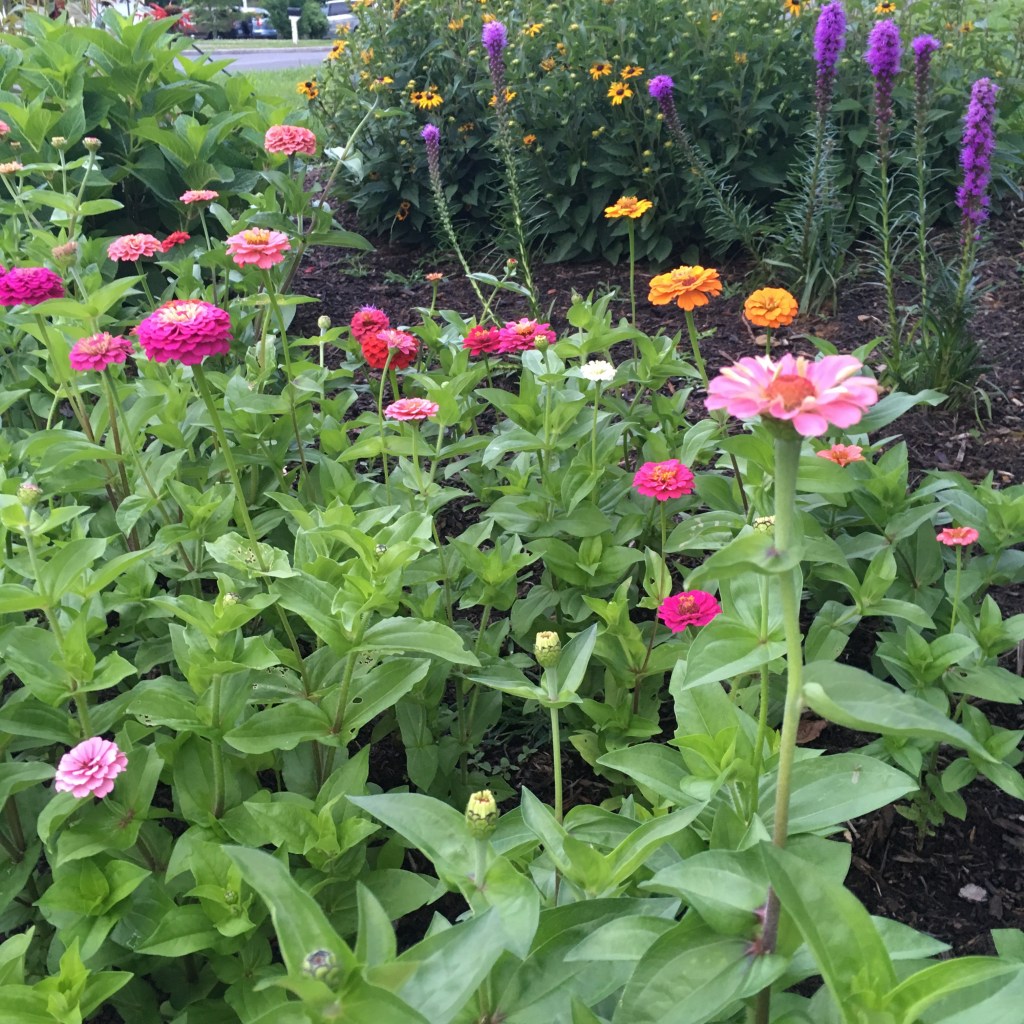
From the hill: black eyed Susans, blazing star, and zinnias
img_2131
Zinnias we grew from seed
img_2125
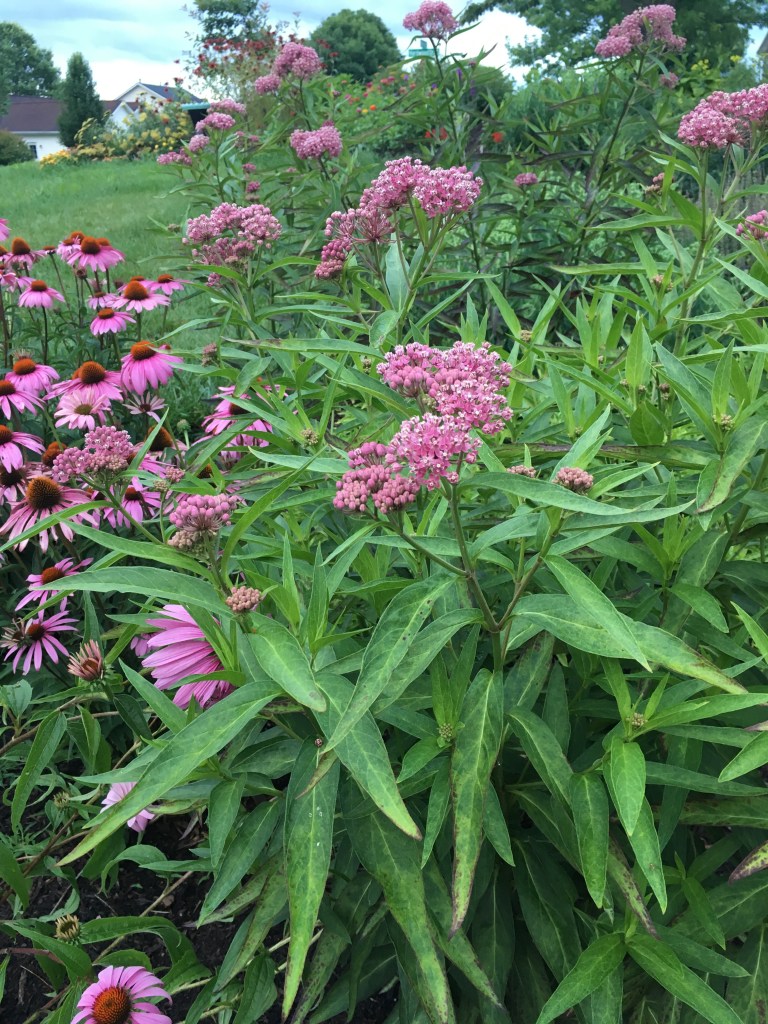
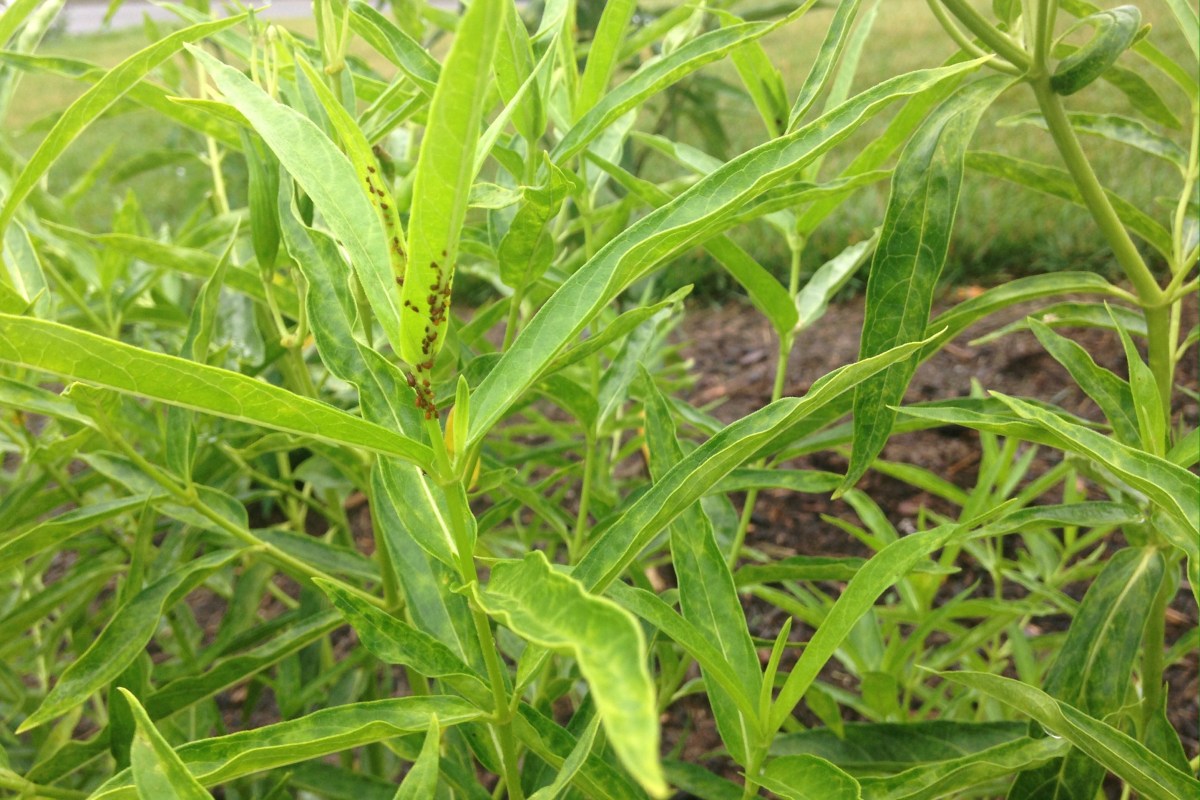
Milkweed before the aphids come; no caterpillars yet
img_2123
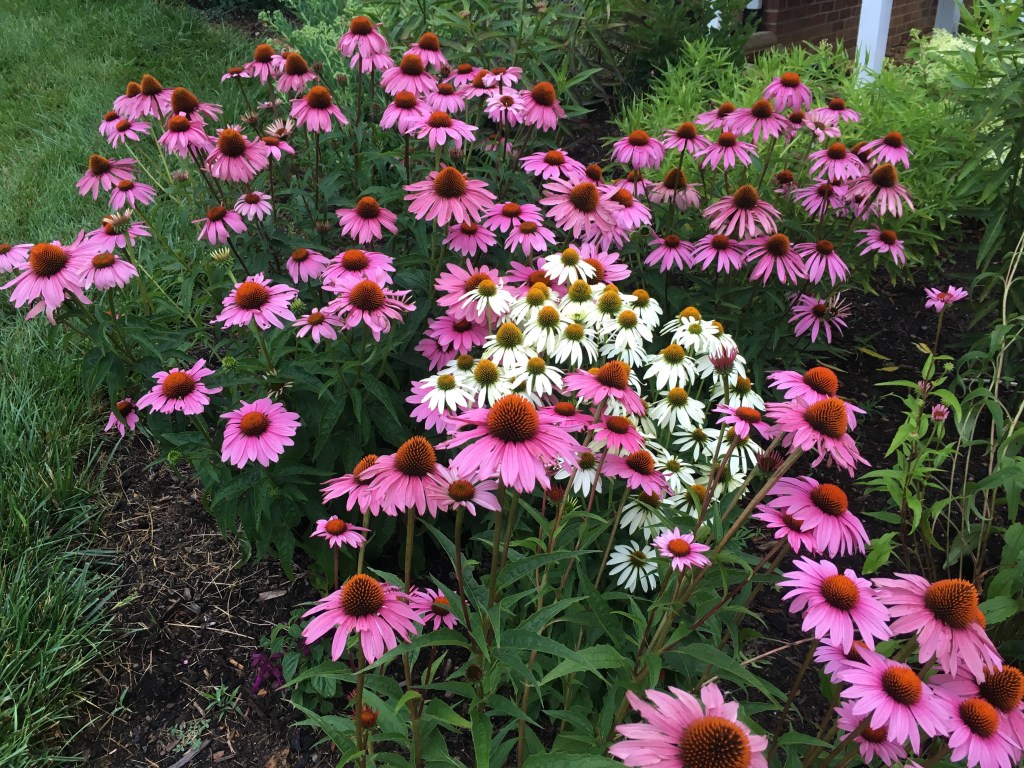
Echinacea looking good in July

img_2120

img_2117
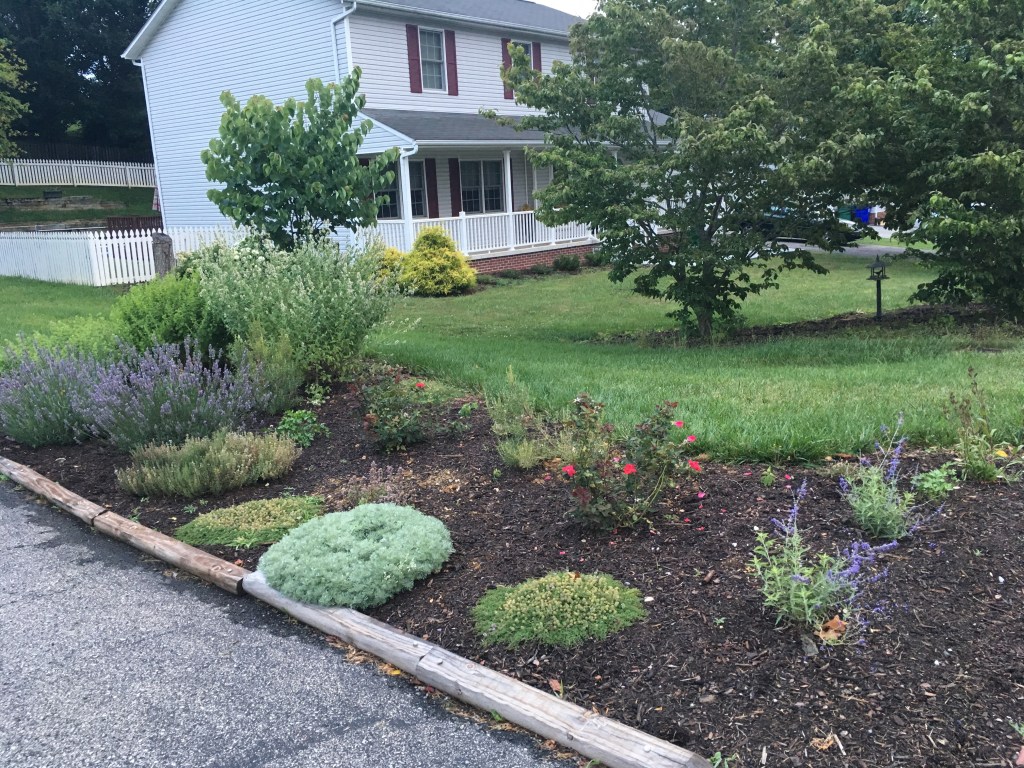
Herb garden needs to fill in
img_2121
Wildflowers from seed mixed with established indigo salvia
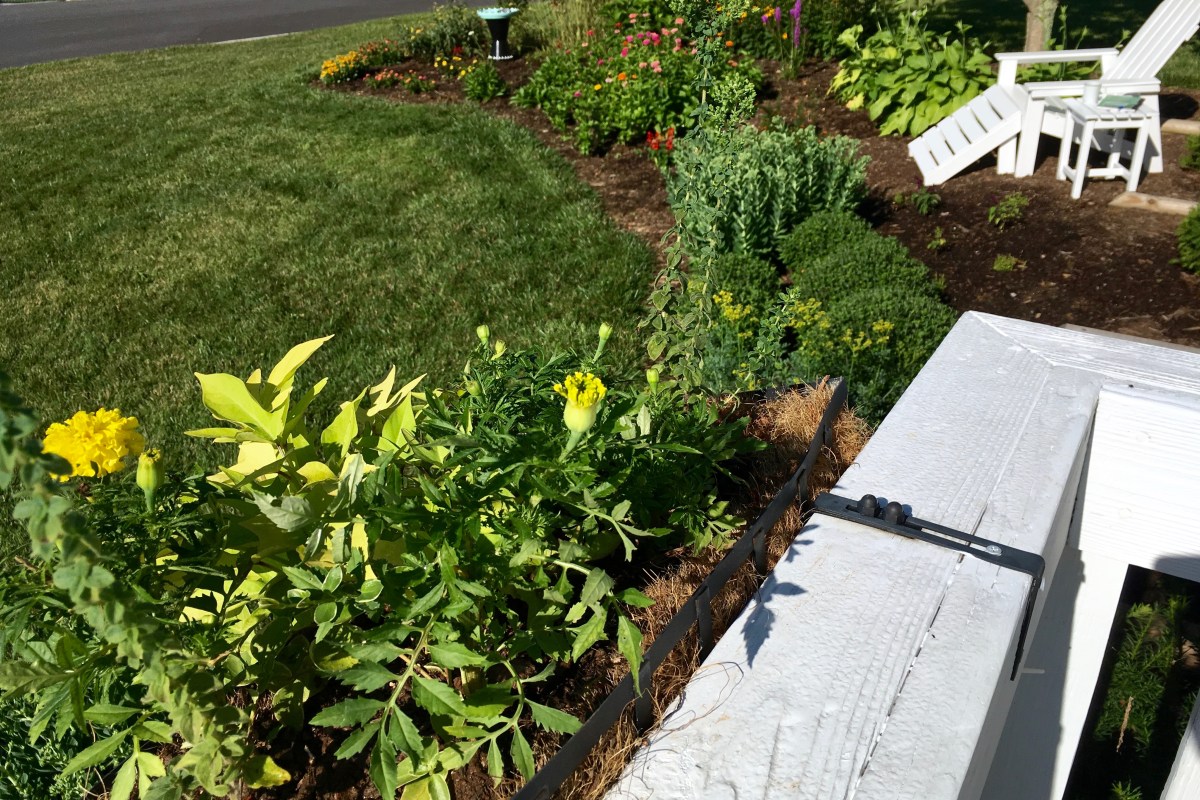
IMG_2122
I replinished the flower boxes last week; they had browned pretty badly

June 10: plant yellow milkweed out back

I weeded this morning, and while doing that, I moved some pink salvia volunteers from the front bed to the herb bed and to the meadow garden out back. I also moved some of the wildflower seedlings around by the mailbox to declump them and distribute them a little more evenly.

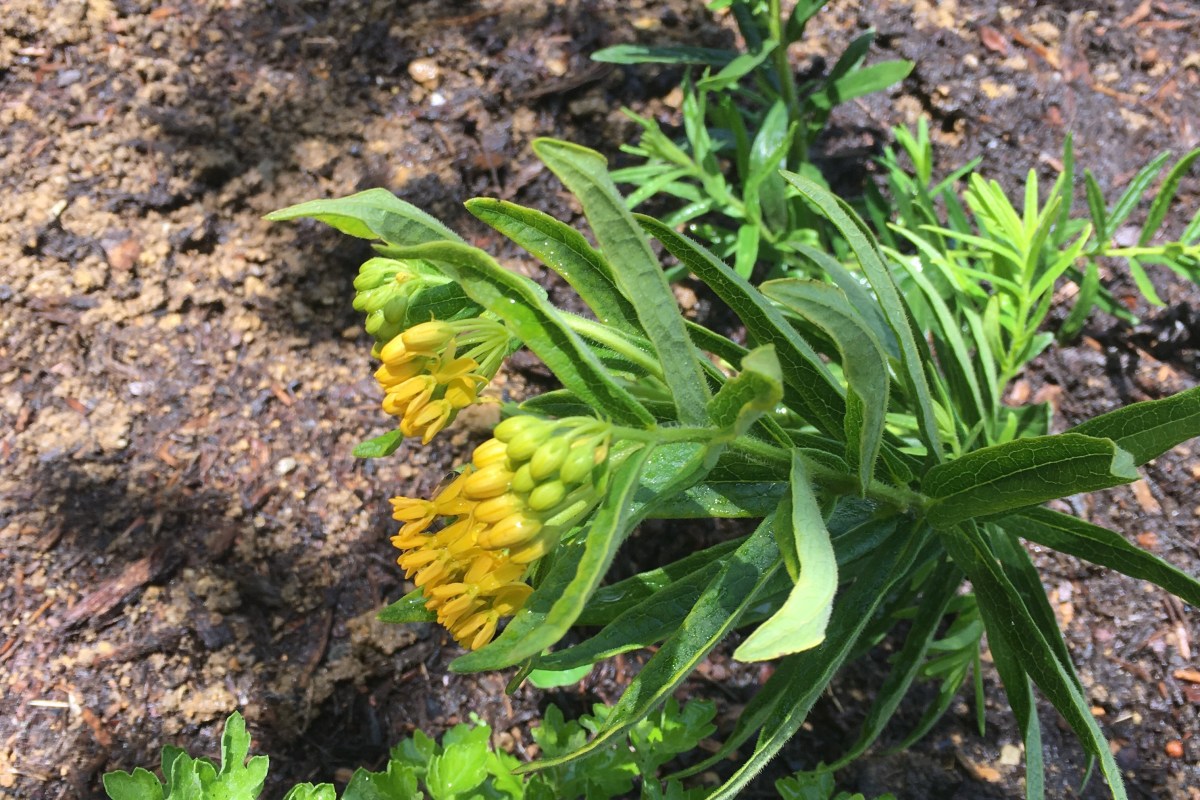
Both rounds of wildflower seeds are coming up out back. The only thing I was still missing back there was milkweed. I drove over to the Crow’s Nest nursery to see if they had any since they didn’t on any of my million trips prior to today.

They had $10.99 gallon pots (I think they’re a gallon) in yellow, orange, pink, and white. The only one blooming was the yellow one, and I really want something blooming back there while we wait for everything else to come in, so I got yellow though I had originally intended to get orange.

I put it in the ground on the hill today, and we’ve got one week to water it in before vacation.

Meadow hill: bee balm about to bloom, new milkweed
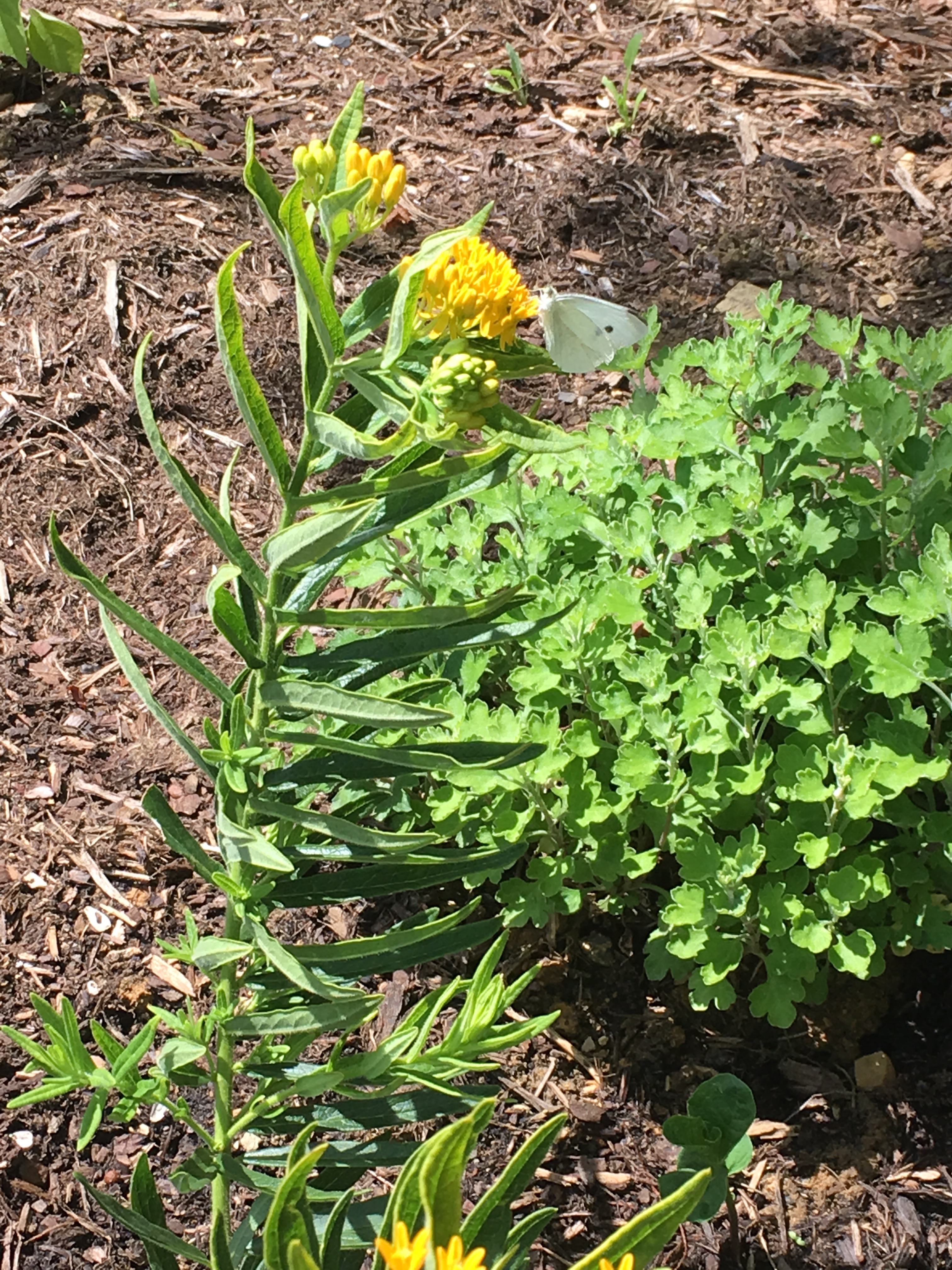
Butterfly already drinking from new milkweed

Rainy day at the book store

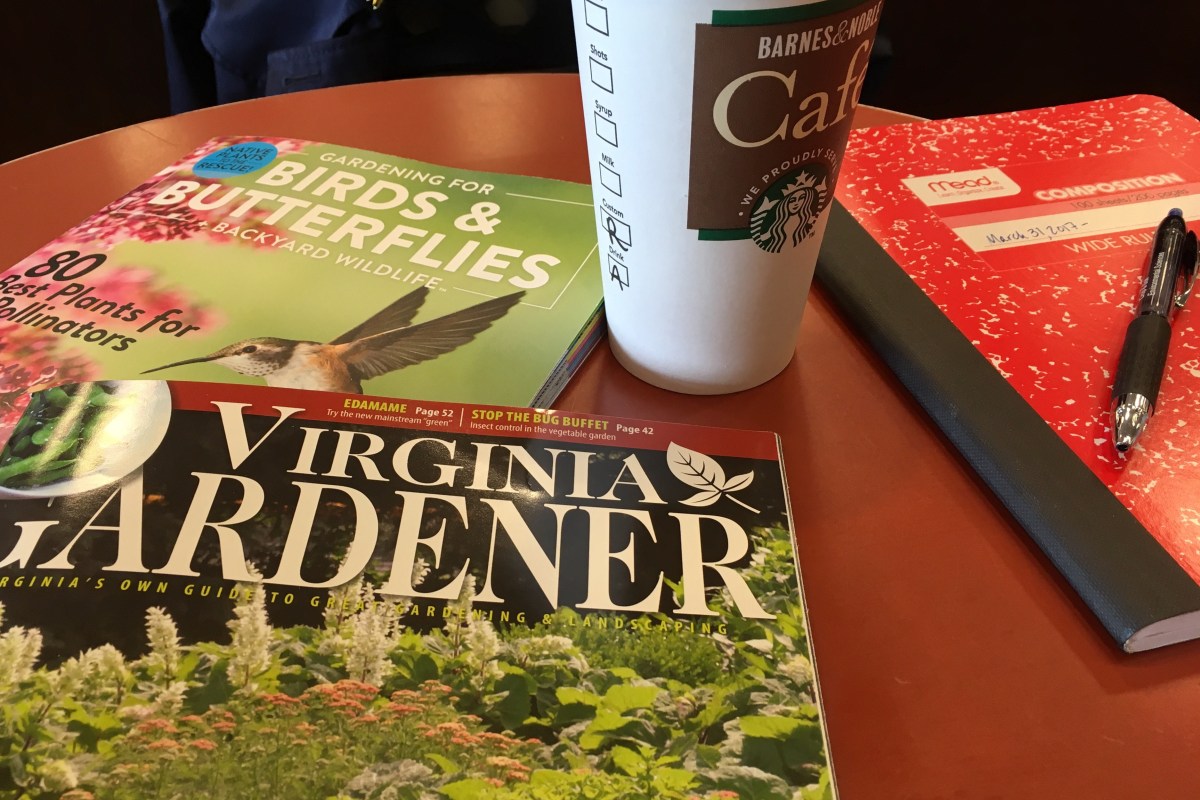
I am at Barnes & Noble on a sodden Friday — my flex day. On the round Formica café table are my coffee, two gardening magazines, and a warm peanut butter cup cookie on a white ceramic plate (“For here, please”). The café hums behind me — I spent far too much time selecting my seat (in the corner? by the window? with a wall behind me? facing the tables or the bookstore?) — and in front of me a man in a cobalt blue sweater and well-worn sneakers browses the technology aisle. Rain drops run in rivulets down the store windows, and I am cozy with my coffee, cookie, and composition book.

I left my laptop at home. In this murmuring book store, on my day off, I am surrounded by physical media. Journals, books, magazines. Vinyl, compact disks. My pen tip scratching across the blue-lined paper of a wide-ruled Mead composition book (they didn’t have college-ruled, which is probably for the best now that I have old-lady eyes).

Before I left home, I opened my computer to pay a bill and look up some phone numbers (eye doctor, nail salon) and hours (library, book store). As soon as I opened it, Slack boinged at me, Telegram dinged at me, red notification bubbles glared at me, and browser and calendar banner notifications slid open in the upper right of my screen. I quit every application quickly so I wouldn’t see anything that might suck me in.

I managed to not work — a narrow escape! — but did not manage to avoid falling into the digital chasm. After I finished my online errands, I somehow spent 15 minutes searching for desktop wallpaper to satiate my craving for turquoise water, warmth, and a feeling of tranquility. I have no idea how I ended up there. I did not find satisfactory wallpaper before realizing the trap I was falling into. I shut the laptop and left it behind so I could spend my rainy day flex day at the book store.

Cherry blossoms are popping pink against the brown landscape, and I saw my first tulip of the year today, a spring yellow. 

Today’s drenching should green the landscape quickly. I wanted to spend some time today weeding,  but I’m not sad the rain is keeping me in instead. I haven’t started thinking about the garden yet this year, and with how warm it’s been, I’m finally ready. On the table in front of me are a glossy, staple-bound Virginia Gardener and a matte, glue-bound Gardening for Birds & Butterflies

The green of their covers is fresh and alive compared to the dreary March grey outside. I fear I will leave here with a mind full of wishes, and a dangerous desire to spend a lot of money on flowers.

Chrysanthemums

The garden is transitioning from summer to fall. The milkweed is mottled and scraggly, the sweet basil is yellowed and setting seeds. The parsley bolted, the Thai basil fell over under its own weight.

It’s time to do some cleanup.

Yesterday it rained all day. It was one of my favorite types of autumn Saturdays: chilly, grey, raw. We spent most of the day running errands. We bought new alarm clocks for the kids, harvest candles for the mantle, pumpkin-pie-scented wax melts to make the house smell autumny, and at the last-minute, mums for the garden.

Our daughter and I spent a good half hour inspecting the different colors of mums, gravitating repeatedly to particular ones (white for our daughter, burgundy for me), thinking about the colors in our garden, looking at pictures of the flower bed on my phone, and brainstorming what we needed to clear out and where we could put our favorite-colored specimens.

Today, the drizzle and pregnant grey are gone. The sun shines bright in a clear blue sky, and raindrops glisten on the green grass. The mums are out there waiting for me. I see our daughter’s white ones in a happy clump where the parsley once was. The wind is chilly right now, though, despite the brilliant sun. I’ll need a jacket and gloves while I work.

For now, I’ve got my slippers on and am sipping coffee from the chair by the window. Leaves shiver on the pear trees across the street, maple branches swing, and coneflowers and salvia nod in the wind. I’ll plant the mums when my cup is empty.

I think I’ll have a refill.

Caterpillar catalog (and the plants that make it possible)

When I returned home after a weeklong trip to Whistler, I was giddy to walk around the garden and find not one monarch butterfly emerging from its chrysalis, but two.

newly-emerged-monarch
Newly emerged monarch on rue

After finding those, I of course crawled around in the mulch and dirt to inspect the undersides of leaves. I found three more monarch chrysalises plus a bunch of fat swallowtail caterpillars who will soon be crawling off to metamorphasize as well.

This is SO EXCITING Y’ALL. Here’s a full caterpillar catalog of what I’ve found so far:

Some friends at work are also interested in butterfly gardening, and are looking for host plant ideas. Since we work for a company that makes, ahem, blogging software, my friend naturally asked “Did you do a blog post on what all you planted?” Nudge nudge.

Shockingly, I have not. So here it is! Kris and Liz, this is for you.

The plants

For Mother’s Day, our son gave me Christopher Kline’s book, Butterfly Gardening with Native Plants: How to Attract and Identify Butterflies. Combined with a bunch of online research, experimentation with a butterfly garden in Florida, and talking to bunches of people who garden for butterflies and caterpillars, this book helped me plan a garden that includes both host plants (that caterpillars eat) and nectar plants (that adult butterflies drink from). The most successful plants in our garden are the following:

Host plants

Milkweed (Asclepias): We planted both common milkweed and swamp milkweed. These are by far the most insect-loved plants in the garden. They are constantly covered in various species, including aphids, beetles, and, late in the summer, monarch caterpillars. Milkweed is both a nectar plant and a host plant. We’ve seen adult giant swallowtails and monarchs drinking from its flowers, and have found at least a dozen monarch caterpillars on it. Word of warning: milkweed will get covered in aphids. The caterpillars will still come even when every surface is crawling with aphids, so we kept our milkweed intact even though it’s not very attractive once it has stopped flowering and it’s coated in tiny orange insects.

Rue (Ruta graveolens): This is possibly my favorite addition to the garden. The leaves are a silvery blue-green, the plant stays neat and tidy (it doesn’t get leggy or messy), it can take the heat (and drought) and still look healthy, and the swallowtail caterpillars adore it. As an unexpected bonus, the monarch caterpillars love it for building chrysalises. We’ve found at least 3 chrysalises in the small, shin-high plants.

annotated-garden_0168
Butterfly host and nectar plants

Nectar plants

Milkweed: all the butterflies big and small love milkweed.

Indigo salvia: Aside from the milkweed, these purple flower spikes are the most popular in the garden for butterflies to drink from. Bees also love these flowers.

Pink salvia: Okay, maybe these are tied with the indigo salvia for nectar popularity, at least for hummingbirds. I see hummingbirds drinking from these almost every time I sit in the garden.

Bee balm (Monarda): Butterflies and hummingbirds love this as well. Hummingbirds dart between the pink salvia and the bee balm.

Thai basil: I’ve seen some small butterflies and moths (and caterpillars) on these flowers.


annotated-garden-0063
Butterfly host and nectar plants

Cone flowers: Butterflies always visit these.

Joe Pye weed: Butterflies love to drink from Joe Pye flowers. Joe Pye weed gets really tall and floppy unless you get the dwarf varieties.

monarch-on-joe-pye_0056
Monarch on Joe Pye weed

We planted some other things that weren’t as awesome as we expected:

Parsley: parsley is a host plant for swallowtails, but the swallowtail caterpillars definitely opted for the rue over the parsley, at least this year. I didn’t find any caterpillars on the parsley, and found at least a dozen on the rue.

I guess the parsley is the only one :-). We have lots of other nectar flowers — brown-eyed Susans, Mexican blanket flowers, some other stuff I can’t remember the names of — but the ones I listed above were definitely the most successful.

If you can identify any of the caterpillars in the catalog, please let me know! I think most of them are probably moths, but I don’t have a good ID book.

Lawn to garden: success!

Earlier in the year, I wrote multiple times about our different strategies for killing grass to build a flower bed. Since then I’ve blogged pictures from the garden, from reading, writing, butterfly-watching, and blogging under our dogwood tree, and photographs of the butterflies and caterpillars who live in the small ecosystem we helped create.

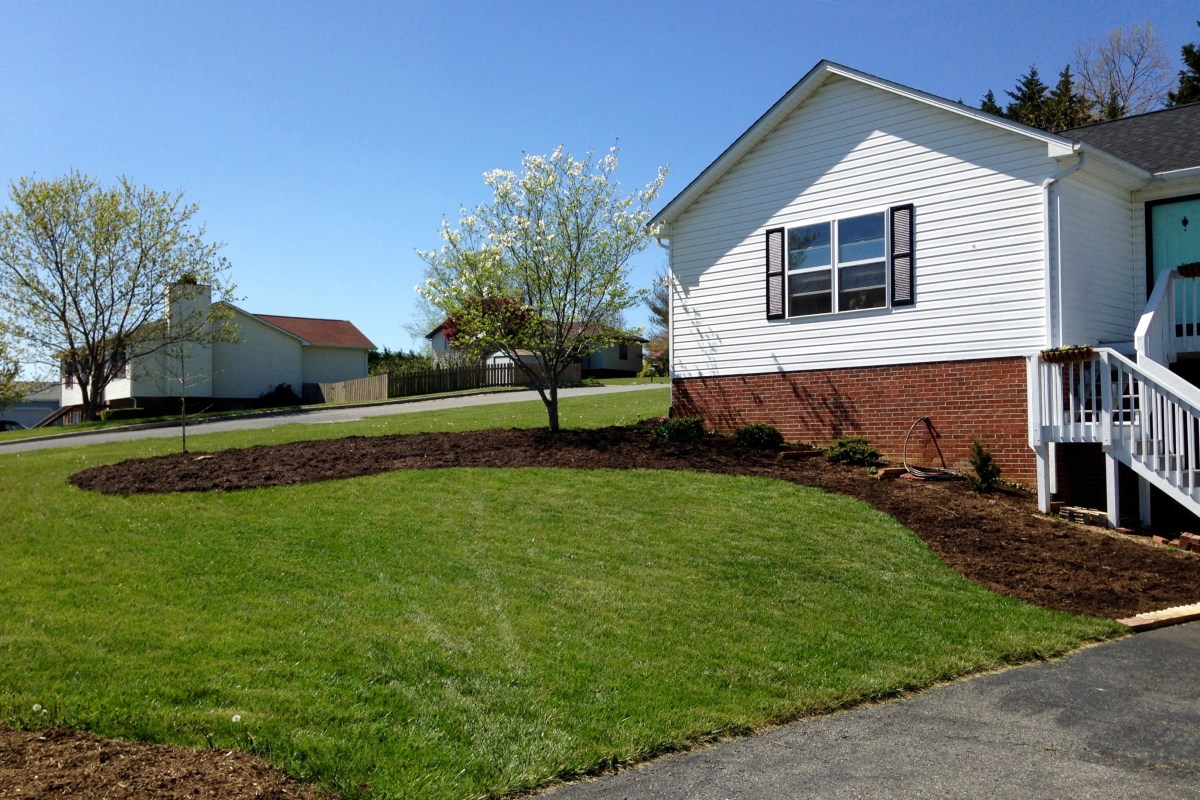
I realized though, that since my April post about building a flower bed, when we were still in the process of killing grass, laying out cardboard, and shoveling mulch, I never brought it back around to show the garden in its full summer glory, with before and after pictures. So here goes (I don’t have before and afters from the same angle, but hopefully you’ll be able to see the difference):

Before:

mulch on newspaper 19
Building the bed


Now:

flowers_0067
Morning flower bed

I wanted an herb garden and a butterfly garden, now we have both butterflies and herbs. We’ve made endless batches of pesto and basil gin smashes.

The kids and I check for caterpillars and chrysalises every day. At last count we have about 8 monarch caterpillars and 10 swallowtail caterpillars, and we think we found a monarch chrysalis in progress yesterday in the rue bush. All the work has paid off :-).

Die aphids!

I think I may be deriving too much pleasure from finding aphid corpses all over my milkweed plants. But it is so satisfying to squirt them with soapy water, then come back the next day to find desiccated aphid bodies where plump, orange life-suckers once were.

Killing aphids may be the highlight of my mornings now. Today I went out in quite a getup: purple workout clothes, green rubber boots, a flowery coffee cup in one hand, and a plastic spray bottle filled with sudsy water in the other. I giggled as I  squirted aphids, thinking of my friend J when she played out a similar attack on hornets. She used RAID and screamed a battle cry, “Die MoFos!* ” as she lunged in with the killing spray. (*cleaned up for public reading). She’s my hero.

The milkweed is for the caterpillars. Aphids beware.

Morning in the garden

When I left for WordCamp Europe, our garden was pregnant with plump flower buds: echinacea, milkweed, hydrangea. While I walked the streets of Vienna, admiring the red geraniums that spilled from window boxes, I wondered how my flowers at home were doing. We can never get our flower boxes looking as good as the ones I saw in Vienna, but that’s ok. I have my whole life to keep tinkering.

It was dark when I arrived home after 24 hours in trains, airplanes, airports, and cabs, but not so dark I couldn’t see the outline of a new purple coneflower when I dragged my suitcase into the garage.

Every morning since I’ve gotten home, I make a smoothie*, walk downstairs to the garage, slip my feet into green rubber boots, and walk out into the dewy grass. I inspect the milkweed, parsley, rue, and passionflower for caterpillars (none yet) and check out the progress of all the flower buds. I deadhead a few withered blossoms. Sip my smoothie. Listen to birds trill. Nobody in the neighborhood is outside. I have it all to myself.

I keep trying to get a good photo for y’all but I’ve had zero luck. Despite digging close to 200 holes and putting a plant in each one, there are still large open spaces in the beds. I know they’ll eventually fill in, but for now the garden is young and I just have to accept that. My husband said we can take our daughter to pick out some annuals this weekend to plunk them in the open spaces. She will be very excited.

Morning in the garden is my favorite way to start the day: beautiful, serene, full of life.

*For the smoothie-lovers, my smoothie usually has kale, banana, walnuts, flax seeds, frozen pineapple, frozen strawberries (or peaches or mangos), and pineapple juice.

The garden is growing

Our grass-killing seems to have worked. After cutting the grass close to the ground, covering it with cardboard, then covering the cardboard with mulch to build up flower beds, we let them sit for a couple of weeks before planting.

On Mother’s Day weekend, we dug more than 150 holes, dropping perennials, annuals, and herbs into our newly formed beds. Now, the garden is growing. Most of the plants are still small, but echincea buds are plumping up, milkweed is blooming, basil is flourishing, and butterflies are finding us.

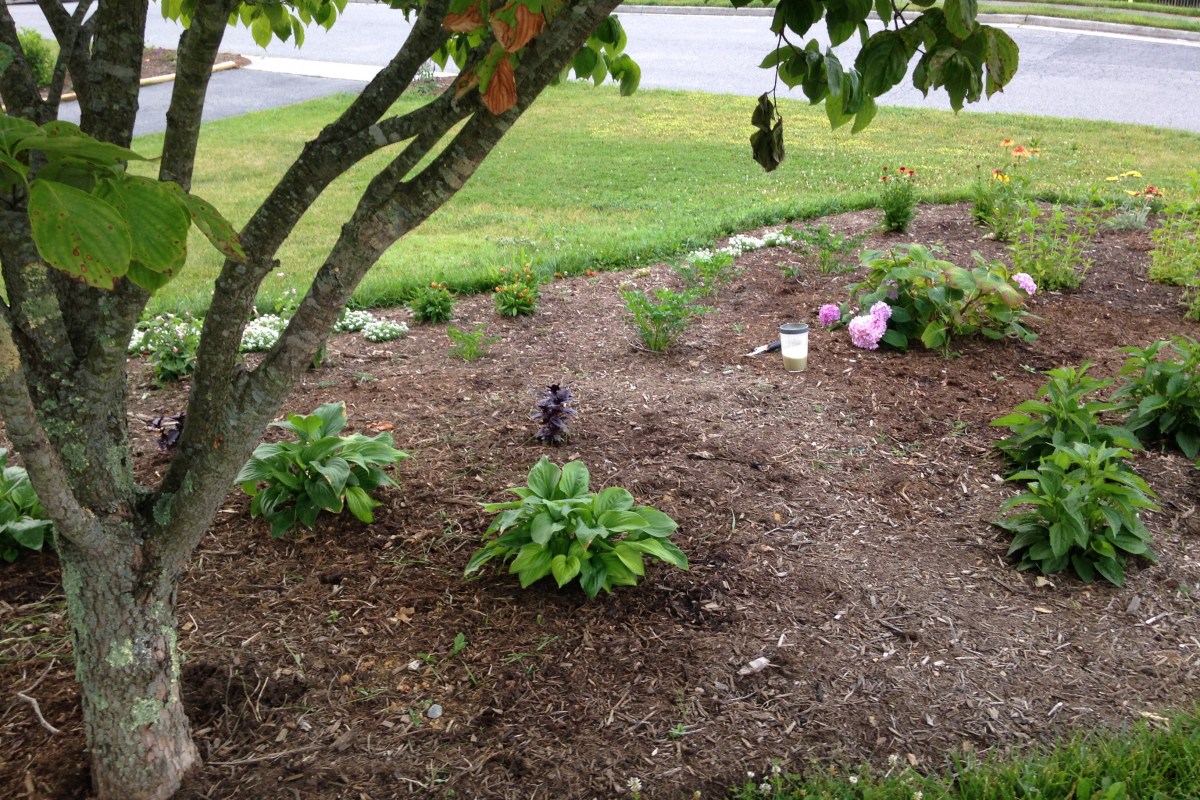
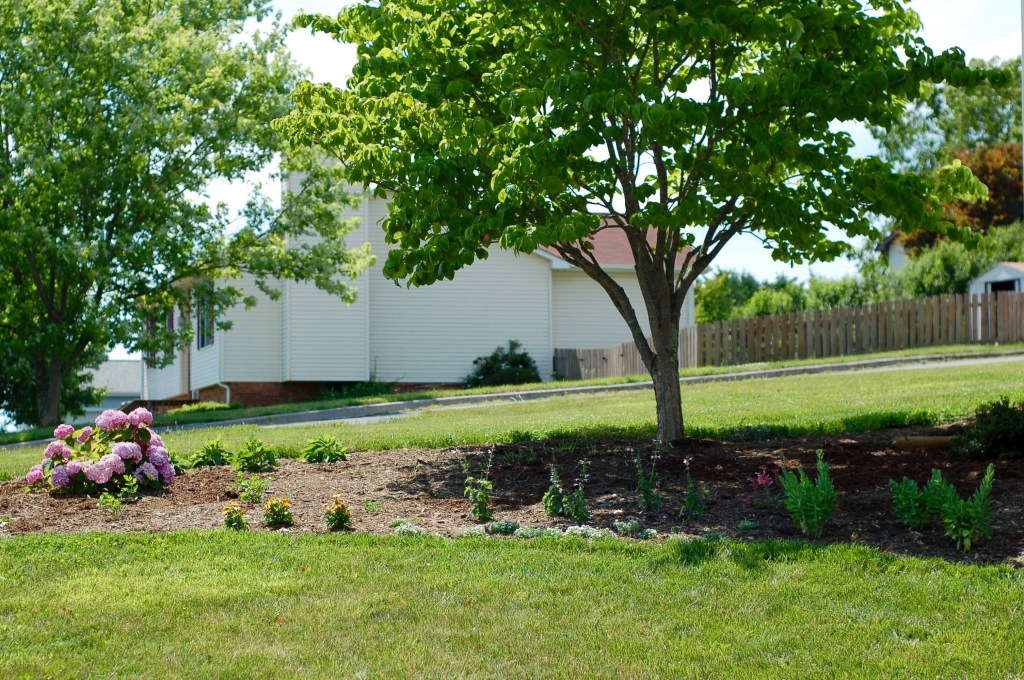
dogwood and plants
Dogwood bed