March 4: More seeds, transplants, and some corms

I’m attempting to manage more than 2000 square feet of flower beds, starting half of that area from scratch and completely reorganizing the other half. My to-do lists are long, and I can’t remember everything I need to do. Or, as is more often the case, I get out there and start on the first true need, then get distracted by a thousand other things I also need to do, but aren’t as high priority.

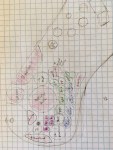
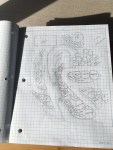
So when I have a long list of things to do in the garden, and I don’t want to destroy my gardening notebook by dropping it in the dirt or spraying it with the hose, I take photos: of my list, of the bed designs, of the seed packets. Then when I’m out there, I know what I need to do, where plants need to move, and what depth to plant seeds.

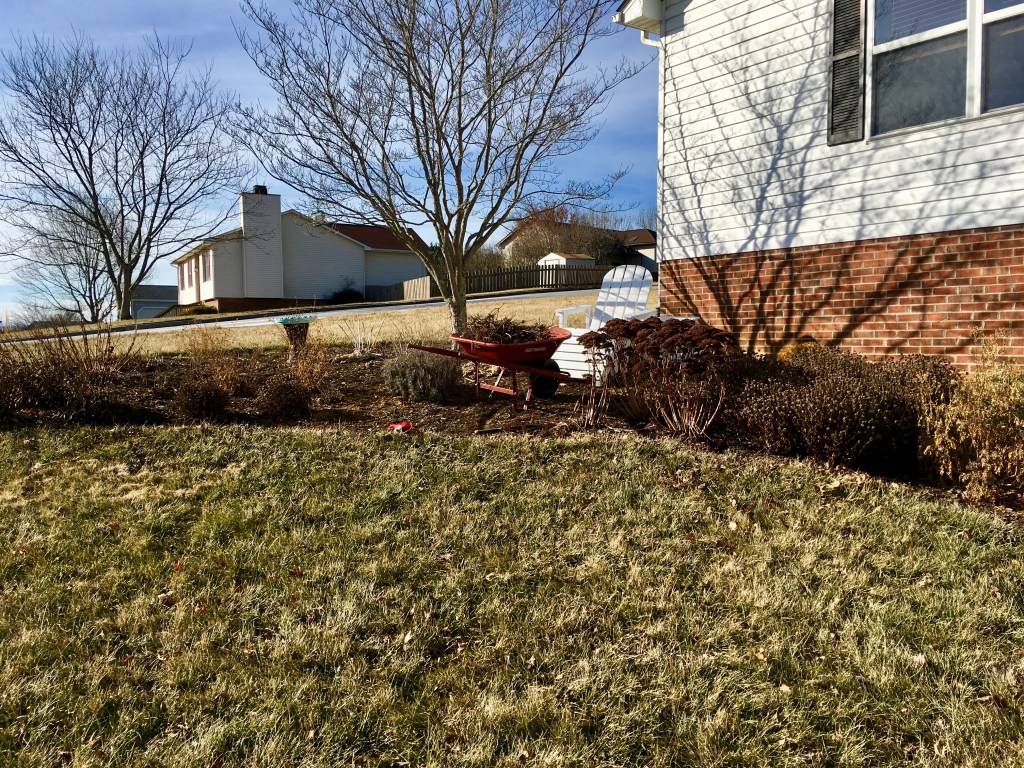
I didn’t get to moving the Rudbeckia, pulling out the mint, or transplanting the hydrangea, and I decided to wait until it’s a little warmer to put the globe thistle in the ground, but we did get to these things:

– Pulled the purple vervain seeds out of the fridge (started Feb 11; should be able to expect seedlings sometime between March 18-25)
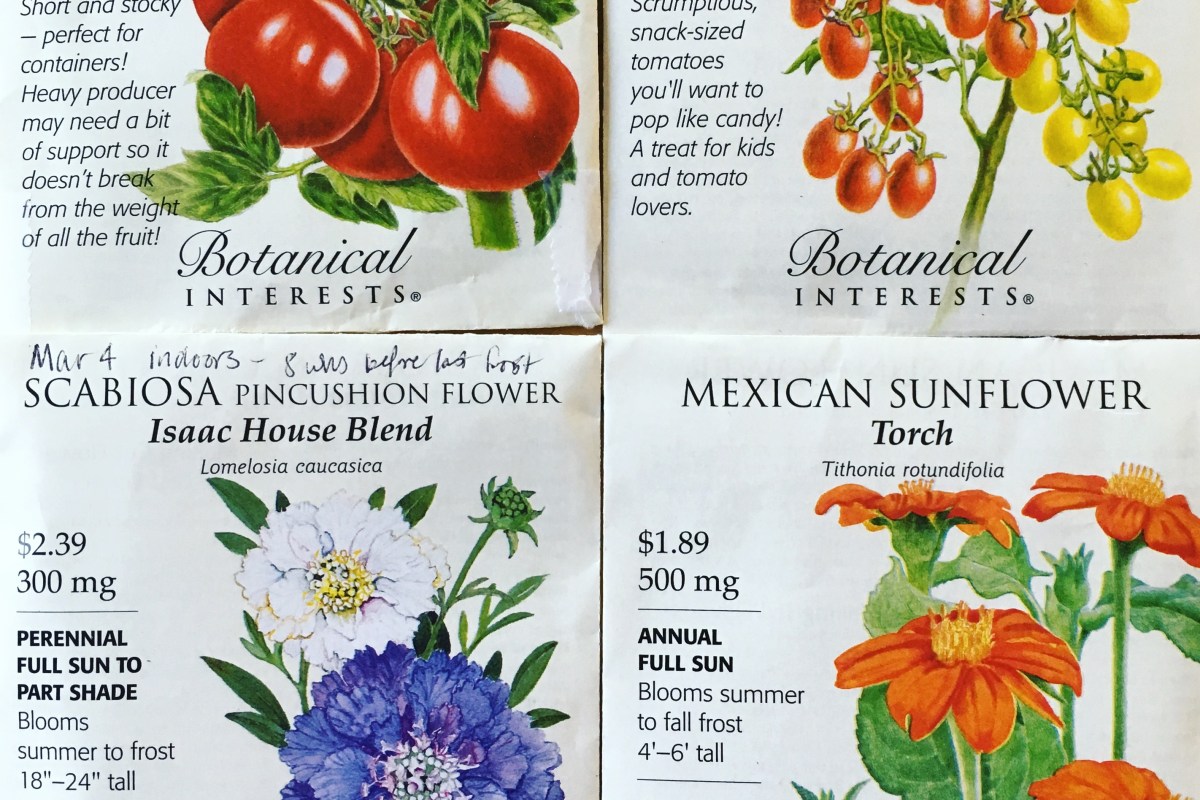
– Started indoors: Mexican sunflower seeds, Scabiosa seeds, and two varieties of tomato seeds.
– Transplanted 4 clumps of bee balm: 1 to underneath window on side of house, 1 to bed 3 and 2 to bed 4.
– Transplanted 2 Shasta daisies to bed 5.
– Son mowed grass.
– Daughter planted Liatris (blazing star) corms in bed 5.
– Daughter planted Crocosmia corms in bed 4.
– Trimmed lavender and transplanted to bed 5.
– Daughter planted tendersweet pea seeds.
– Finished erecting rabbit fence around veggie garden.

The high was 53 today, and the low tonight is expected to be 26. Now I just have to have patience to wait for the green. I hope everything survives!
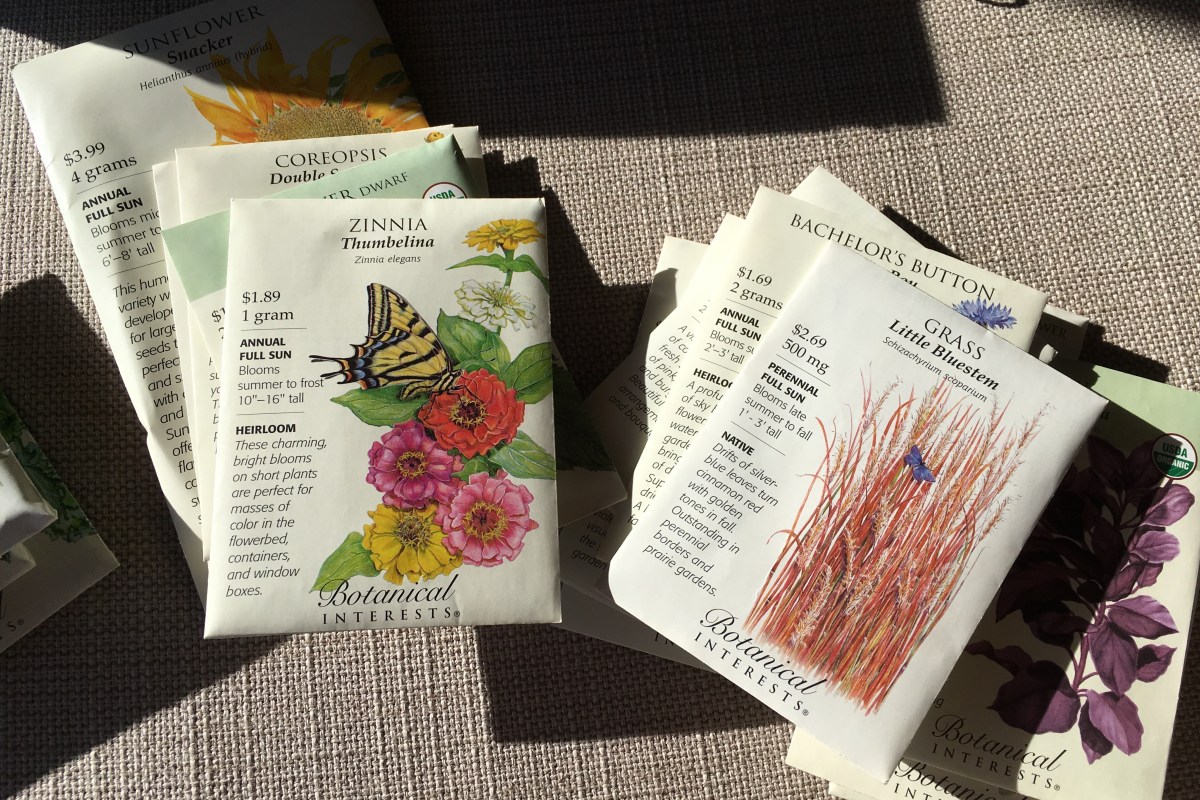
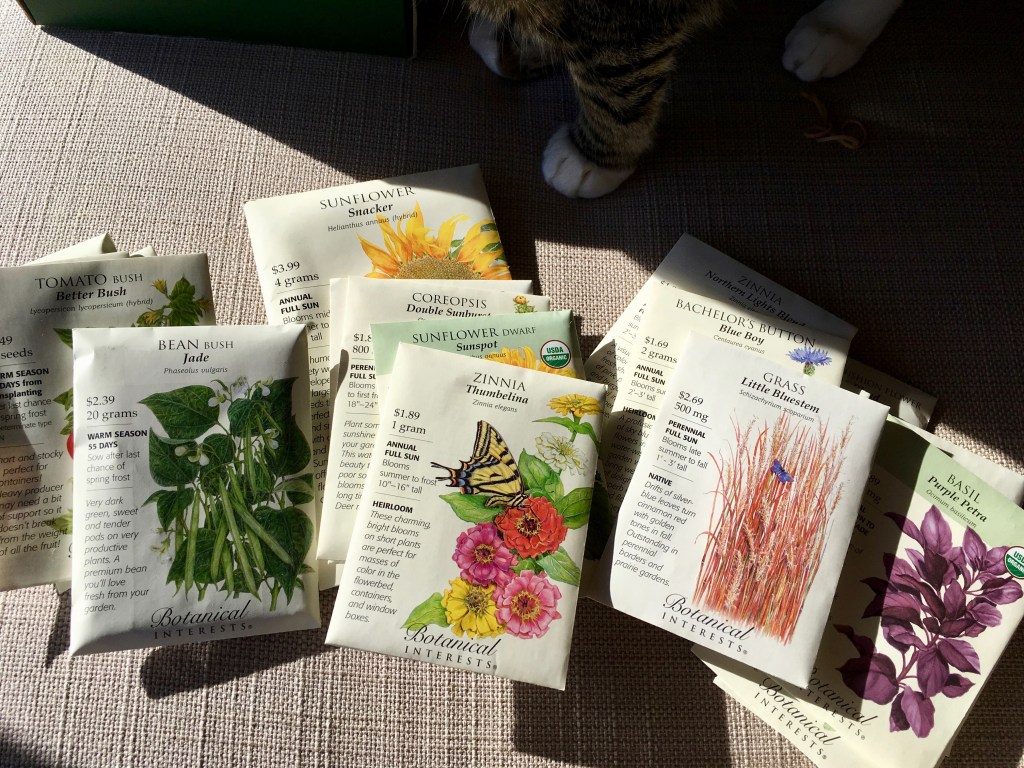
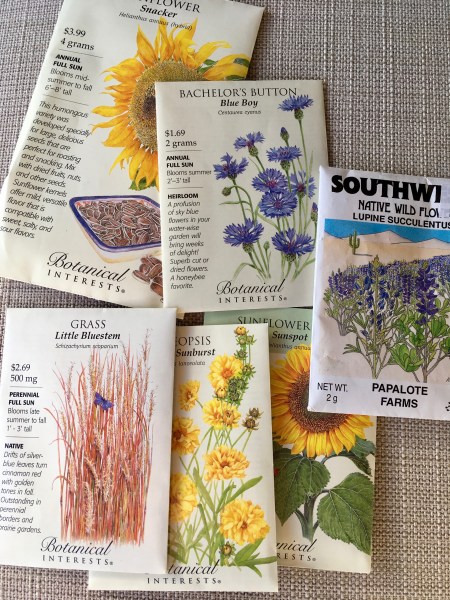
My seeds arrived!

I’ve cleared another 1000 square feet of our property for flower beds instead of lawn, and since it’s on a steep hill and I want it to be relatively low maintenance, I’m trying to find drought tolerant plants that attract butterflies and birds, that will hold the hill in place, and that won’t cost us a fortune to establish.

I also have about a million plants I want to try because I keep seeing them in books and magazines and I love them (globe thistle), or I hear they’re a must have for butterflies and hummingbirds (anise hyssop), or because we had a few come up from the wildflower mix last year and I want more of them (bachelor’s buttons).

Since buying everything I want as fully grown plants would cost almost as much as a used car, I researched what I could start on my own and bought seeds. I’ve been waiting a week for them to get here, and they finally arrived!

seed packets and cat paws
Mostly flowers, but we bought some herb and veggie seeds too

I cleared out some of the brush last weekend — old seed heads from Sedum, dried stems from mums — to prepare for the coming planting season. I probably should have done that in October or November, as the garden looks much tidier now. I wanted to leave the seeds for birds, though, so I was torn between having neat beds and providing food for winter friends. I think it might look more depressing without the dried plants than it did with them still intact, as it’s now very bare, so I’m not sure which I like better.

Either way, I think it might be good that I didn’t cut everything back in the fall: the remaining stems collected dry leaves and created an insulating blanket for their roots in these cold temperatures. I’ve read it’s good to mulch perennials in the fall to protect the roots, and since we didn’t do that, maybe my autumn neglect turned out to be a good thing.

clearing out dead stuff
Clearing out the dead, dry stuff

That’s about the extent of what I could do outside in December and January, so over the past few weeks I”ve spent a lot of time inside thinking about the garden, poring over gardening books and magazines, popping outside to measure, drawing plans, and then browsing catalogs.

Now that I have these beautiful seed packets, I’m even antsier for spring to come so I can start planting. I keep trying to visualize what the beds will look like when plants come in, and I’ve got a calendar for when to plant what and where. I’ll be able to start some seeds indoors in just a couple of weeks.

blues and yellows for front garden
Blues and yellows for in front of the house
pinks and purples for front garden
Pinks and purples for front and back

My biggest questions right now, besides how to make the time go faster, are what kind of seed starter to use — peat pellets or pots with soil? — and whether to buy a grow light. I read something about seedlings needing 14 hours of light, which they won’t get in my basement office, so I think I still have a bit of research to do.

That should kill an hour or two in the zillion hours between now and April when I can get outside and start gardening.

Fall gardening: Sept 30

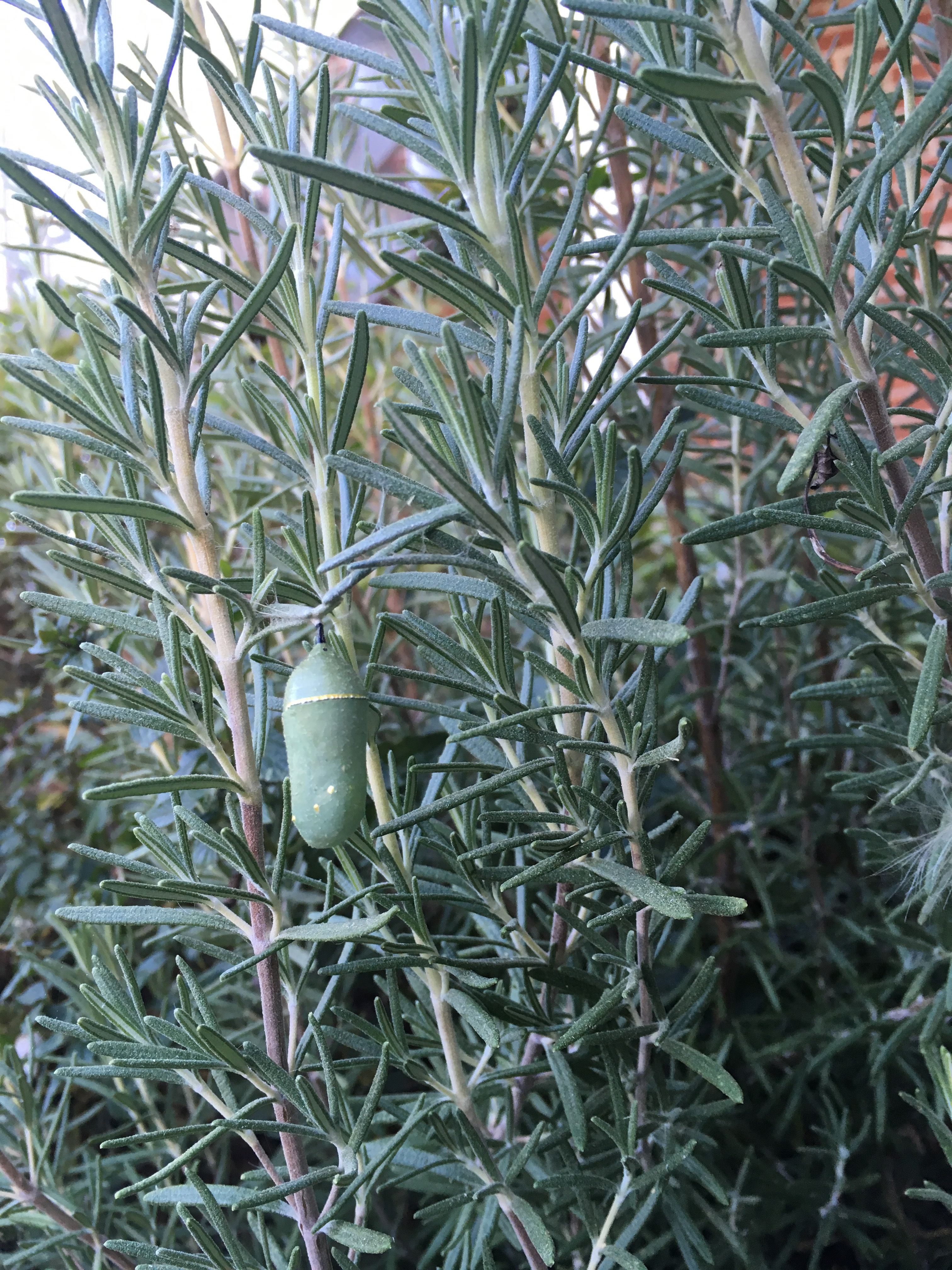
I still haven’t cut the milkweed back, and I’m so glad I haven’t. I just counted 10 monarch chrysalises in the garden — 3 on the rue, 6 on the stairs, 1 on the rosemary — and there’s still at least one fat caterpillar on the plants. The monarch on the stool in the garage emerged today while I was out running errands. My husband sent a video:


There’s a chrysalis under the stairs that looks like it will emerge any minute, and two of the ones on the rue look close as well.

Caterpillar party: swallowtails on rue

Monarch chrysalis on rosemary
I also counted 13 swallowtail caterpillars on the established rue. Two of my cuttings have begun growing and thriving in the herb garden, so I’m excited to have them establish fully next year.

I moved a bunch of stuff today and planted some asters as well:

  • Moved three black eyed Susans  to the herb garden; ripped out the catnip.
  • Moved some of the zinnias to where the black eyed Susans had been. The zinnias were to tall and were getting leggy.
  • Where the zinnias had been, Planted 3 New England Asters and 2 cornflower blue asters that look like mums: Peter III Blue asters from YoderMums.
  • Moved the white pentas behind the asters, and the firecracker flowers behind those.
  • This opened up space by my chair, and I moved the guara next to my chair because it was hidden in the milkweed and I could never see it.
  • Planted cabbages and pansies in the flower boxes.

Fall flower box
Now I can see the rest of the garden from my chair again. The zinnias were gorgeous in their prime but they got way bigger than I expected and started blocking my view. I couldn’t see the birdbath, the lantana, the Shasta daisies, the gomphrena, or the bee balm.

Garden at end of September, with new purple asters

Garden after moving the zinnias and planting asters
It took me all day to plant everything and now it’s too late to sit in my chair and enjoy it. I hope the butterflies will still come. And I don’t know if the hummingbirds are still around, but I hope so. They’ll really like the guara.

September 30 garden

August 25: first chrysalis

The monarch caterpillars are getting fat. During the eclipse, I walked around the garden inspecting the undersides of leaves, taking inventory. I counted 11 or 12 monarch caterpillars on the milkweed, along with 3 swallowtail caterpillars on the rue and the parsley. The milkweed looks terrible — it’s gone to seed and is covered with aphids and big orange bugs that are eating the aphids. The echnicea looks terrible too — brown and fried — but in the mornings, goldfinches perch on the dried heads and sway while they eat coneflower seeds.

August echinacea
Dying, drying coneflowers for the goldfinches

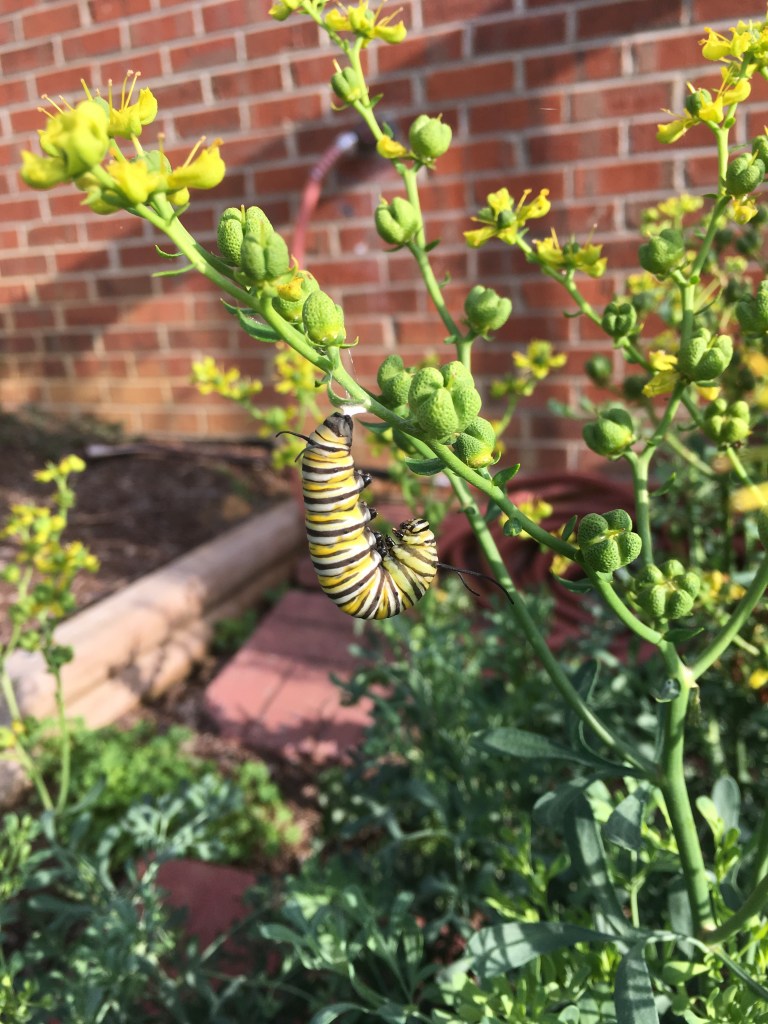
The monarch caterpillars are drawn to the rue for making their chrysalises. I have been surprised by how popular the rue is.

caterpillar pre chrysalis
Monarch caterpillar pre-chrysalis

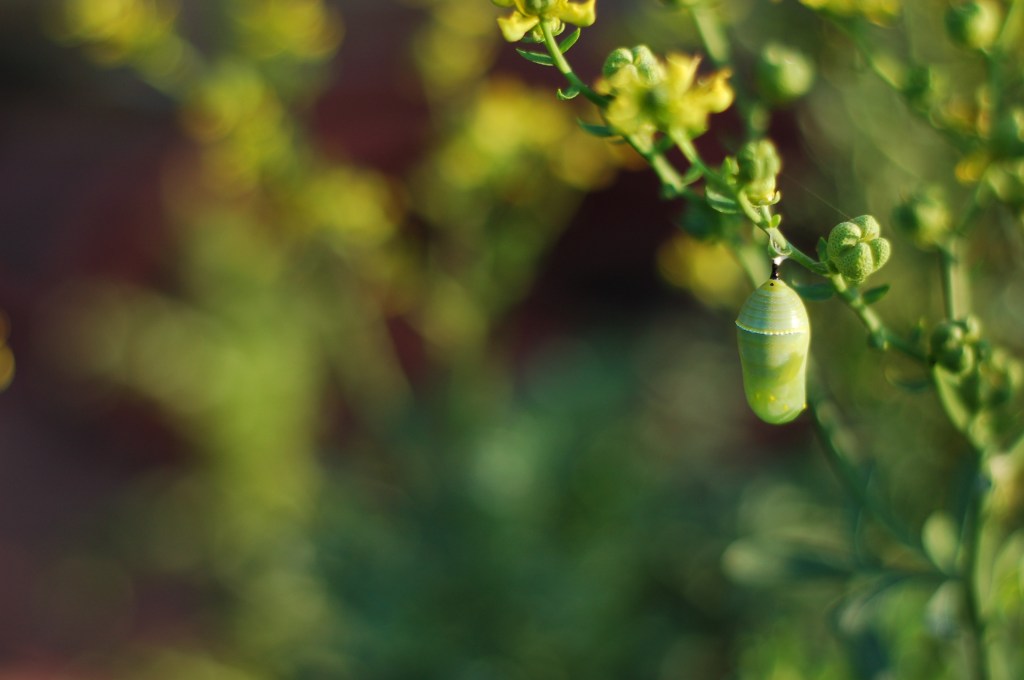
It currently hosts swallowtail caterpillars who are eating it, and monarch caterpillars who are hanging in their chrysalises from it.

pretty chrysalis
Same monarch caterpillar later in the day

And just because I like to check in each year to see what the status of all the plants were in prior years, here are some photos from the garden in late August:

August 6: Butterflies in the garden

Before we sailed yesterday, I spent several hours in the garden, sitting under the dogwood tree, reading butterfly books, and photographing all the butterflies that came to visit the zinnia patch six feet from my chair. There were moments when the zinnias hosted monarchs, swallowtails, painted ladies, skippers and a hummingbird all at the same time.

The day was dry, the sky cerulean, a breeze blew the butterflies and flower heads, and the temperature was a comfortable 77° F. The zinnias were most hopping at about 2pm.

I went out at the same time today. The sky is cloudier, it’s warmer, and I mowed the grass. The large butterflies are just not here today. I wonder why.

Catalog of butterflies from August 5 & 6:

  • Monarchs
  • Black swallowtail
  • Palamedes swallowtail
  • Grey hairstreak
  • Silver-spotted skipper
  • Clouded sulphur
  • Cabbage white
  • Painted lady

August 4: flower boxes are surviving

By August, our flower boxes are usually brown and desicated. Somewhere along the way we had forgotten to water, and in summer sun and heat, it doesn’t take long without hydration for the plants in these tiny boxes to shrivel and die.

This year I lined the coconut liners with plastic and I water them every day. And, what do you know, it worked! I put these plants in the boxes on July 2, and here they are a month later, still alive. It’s amazing what the basic necessities of life will do.

In other news, the rue cuttings I started on May 19, and put in the ground sometime in early July (maybe the same day I planted the flower boxes), have new growth! Only one of the cuttings actually had baby roots when I transplanted them into the earth, but now two of the cuttings have survived, put energy into their roots, and are finally starting to make new leaves as well.

I also planted a phlox — Phlox paniculata ‘Younique Old Pink’ — after the kids and my husband came home from a hike a few weeks ago and my son said, “Mom! Do you have any phlox in the garden? We saw some on our hike and it was _covered_ in butterflies.”

Of course I had to have some.

I’ve been on a hunt ever since. It was in every nursery in the spring, but late July and August are not really gardening season, so none of my regular suppliers had any. I found some at Lowe’s today and grabbed one. I planted it next to my chair, under our bedroom window. It is quite fragrant, and I can’t wait until we can open the windows again and smell it from inside.

Everything is in bloom, and I love it. I spent much of my day off today in the garden, watching butterflies and enjoying the summer abundance. I need to get out my real camera to capture some of this beauty so I can keep it for winter.

Weeded and mowed. And first monarch caterpillar!

I cut back the bee balm this week. It’s stems sprawled, leafless and leggy, and a mildew rusted the few withered leaves that were left. A fresh crop greens the ground where the desiccated bee balm swayed before, and fresh stems leaf towards the sky. 

Cutting that back inspired me to demolish the catnip as well. It had bushed into a chest high tangle of brown stems and withered leaves at its base and almost to its tips, leggy and past its prime. Birds and bees still loved it for its flowers and seed heads, which caused significant internal conflict about cutting it back. We’ve got a ton of other flowers and seeds and branches for perching, so I whacked it.

 After two weeks out of the garden, and after a drenching rain, I needed to trim and neaten. Weeds trashed the garden. It looked like an abandoned parking lot. The grass was shin high and gone to seed as well. The yard was not tidy like I like it.

All week I watched the forecast, hoping for a pleasant Saturday to garden. All week, the forecast called for rain. I slept in, and when I awoke, the sun shone on sparkling wet grass. 

I spent the morning tearing out weeds, snipping dead flower stems, chopping aphid-infested seed pods off of milkweed. And in doing so, found our first monarch caterpillar of the season:

Everything is blooming, and the hummingbirds don’t mind that I cut back the bee balm. One just thrummed in front of me, zipping over to the firecracker plant. It’s drinking there now. I’ll finish up the mowing and go sit in my chair to enjoy the flowers without the distraction of weeds and tall grass.

First monarch, July 13

I was sitting by the window yesterday, drinking my afternoon coffee and working, when I saw a non-yellow, non-white flutter of wings down by the milkweed in the garden. We’ve had scores of white and pale yellow butterflies so far this year, but any others have been rare.

I kept watching until I saw it again, then there it was: the first monarch of the seasons. I’m in the garden now, drinking my morning smoothie, and then I’m going to inspect the undersides of milkweed leaves for monarch eggs. Maybe we’ll have caterpillars soon. 🐛 

July 9: caterpillar, goldenrod, and new chair

Our son asked yesterday, “Are there any caterpillars in the garden yet?”


swallowtail caterpillar on rue july
Swallowtail caterpillar on rue

I’m only aware of one (other than a small crop of swallowtail caterpillars earlier in the spring on the rue), and I remember they were quite late last year as well. I want to keep better records this year of when I do things in the garden, and when caterpillars appear.

We were supposed to camp this weekend, but our car broke down and we stayed home instead. I’m relieved, honestly, because it’s been weeks since I’ve been home on a weekend and had a chance to enjoy the garden. I’ve spent the past couple of days cleaning things up and moving stuff around out there:

Butterfly/caterpillar/bird watch

  • One swallowtail caterpillar on rue.
  • No caterpillars (or aphids) on milkweed yet.
  • No monarch sightings.
  • Saw a swallowtail butterfly on the milkweed yesterday.
  • Saw a hummingbird drinking from the bee balm, despite the ragged state of the plants and flowers.
  • Saw a bird splash briefly in the bird bath in the evening.

Gardening update

  • My husband moved one of the adirondak chairs he made under the dogwood, and it’s amazing! I moved some phlox around to make room for the foot stool, and I brought the table over as well. I also moved some of the purple salvia from under the echinacea to over by my new perch.
  • Moved three goldenrods from under the tree out back to 1/ a sunnier spot in the back bed; 2/ the herb garden, next to the catnip; 3/ behind bee balm in hilltop bed
  • Planted two perennial tickseeds (Coreopsis “moonbeam”) in herb garden to add some yellow (there was too much lavender/purple without anything to pop it)
  • Applied rabbit repellant (cow’s blood, $21 for a spray bottle for which the sprayer broke after applying repellant to four plants) to the milkweed out back in the evening
  • Cut seed heads from rue
  • Deadheaded indigo salvia and yarrow
  • Weeded
  • Dug up a passionflower volunteer and moved it to the trellis. It seemed to still be attached to the mother root, from which no new passionflower grew where it needed to grow. Not sure if the volunteer will make it after I ripped it away from the main root.
  • Trimmed bee balm to keep it out of the bird bath.
adirondak chair under dogwood
My new perch

Status of the garden: July

We’ve been away or I’ve been working the past few weekends, so I haven’t had a chance to spend much time in the garden. It’s a beautiful morning, though, and I took a few photos before starting work today.

The current status of the garden is: in bloom. In bloom and being eaten by bunnies.

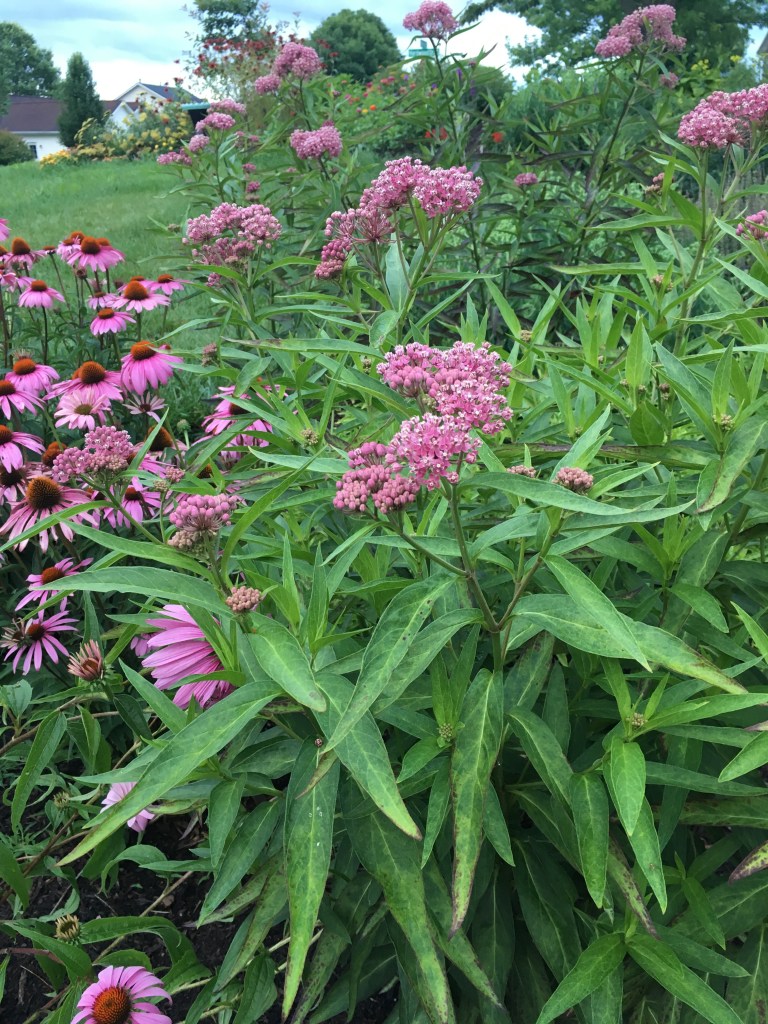
  • Echinacea, zinnias, milkweed, blanketflower, lavender, blazing star, black eyed Susans, bee balm, hydrangea by the stairs are all in bloom, and the yarrow is in its second round of blossoms.
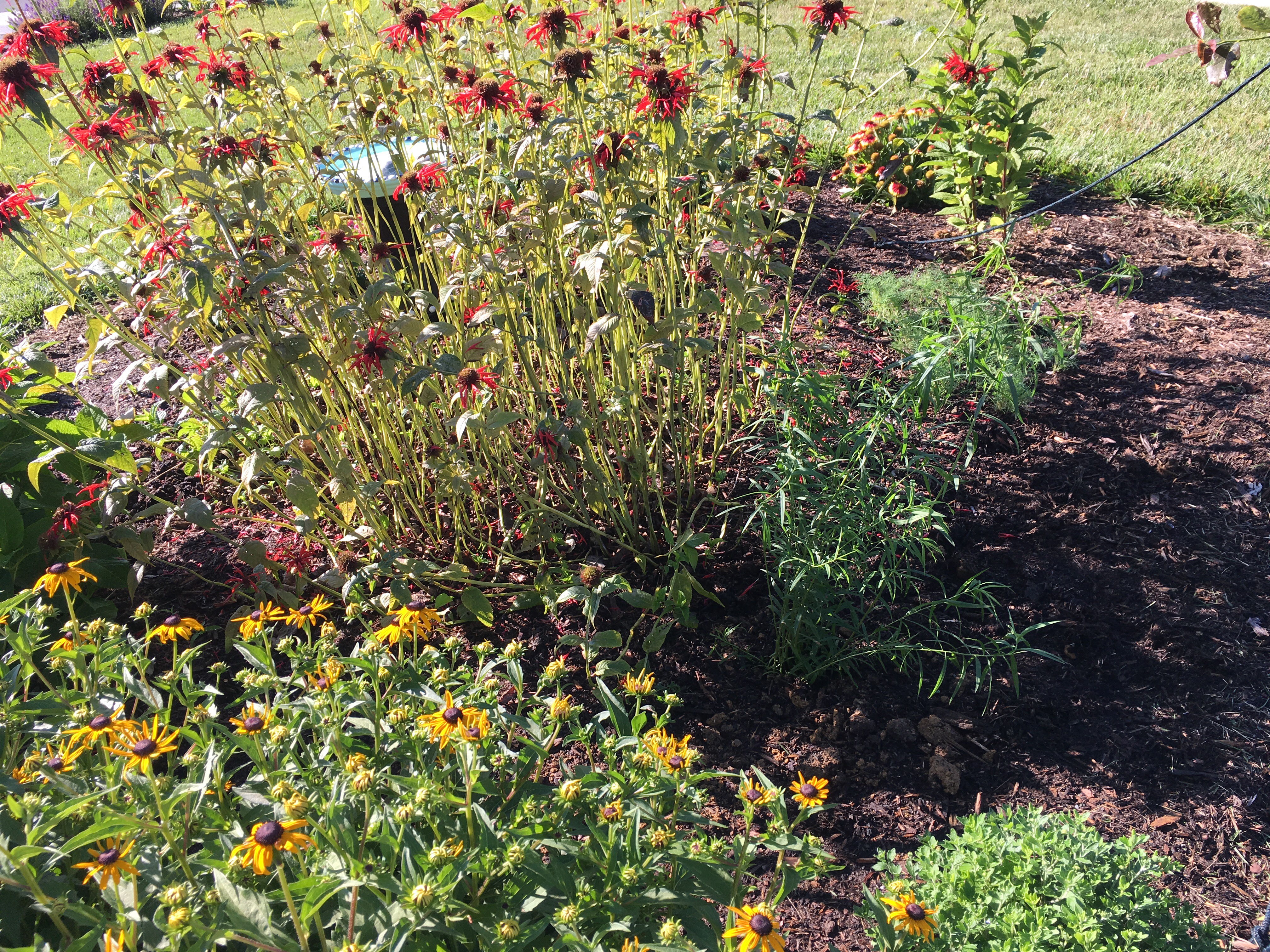
  • Bee balm is past it’s peak and is looking pretty bad. We need something low and bushy in front of it to hide it’s legginess.
  • Joe Pye and Shasta daisies should bloom soon. I don’t see flower buds on the hilltop hydrangea.
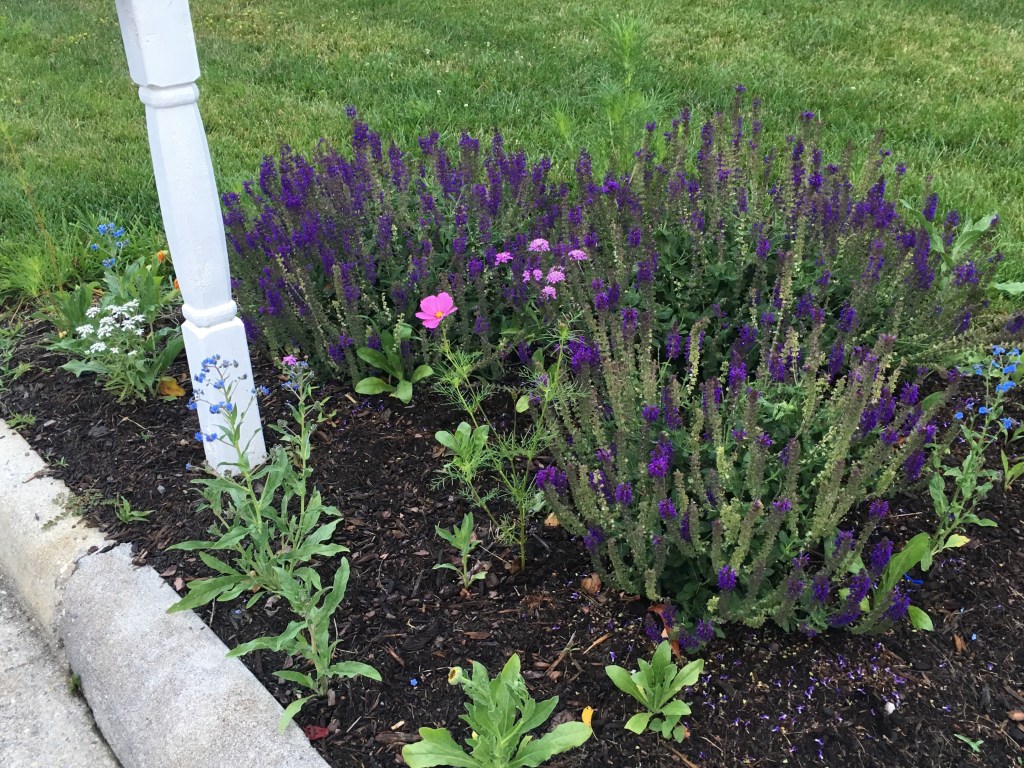
  • Mailbox wildflowers are doing great. Cosmos, candytuft, calendula, and a blue flower — maybe stock? — all blooming.
  • Bunnies ate the yellow milkweed in the back garden and also many of the wildflowers. The remaining wildflowers are slower going than out front. Calendula seems to be doing well.
img_2135
From the hill: black eyed Susans, blazing star, and zinnias
img_2131
Zinnias we grew from seed
img_2125
Milkweed before the aphids come; no caterpillars yet
img_2123
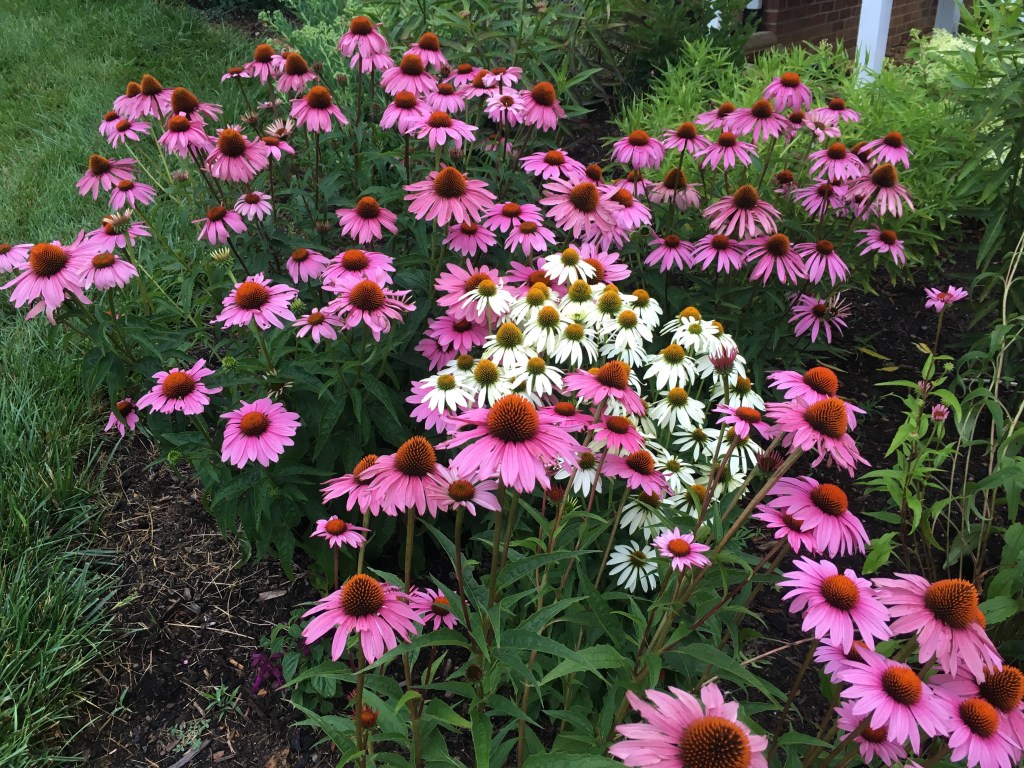
Echinacea looking good in July

img_2120

img_2117
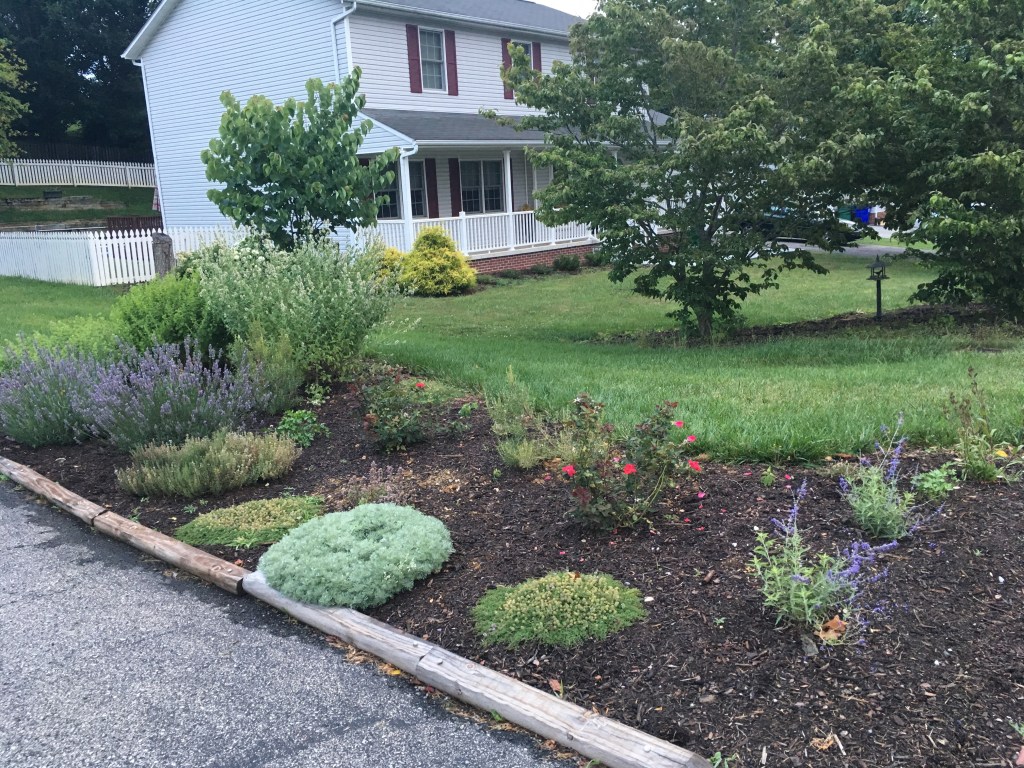
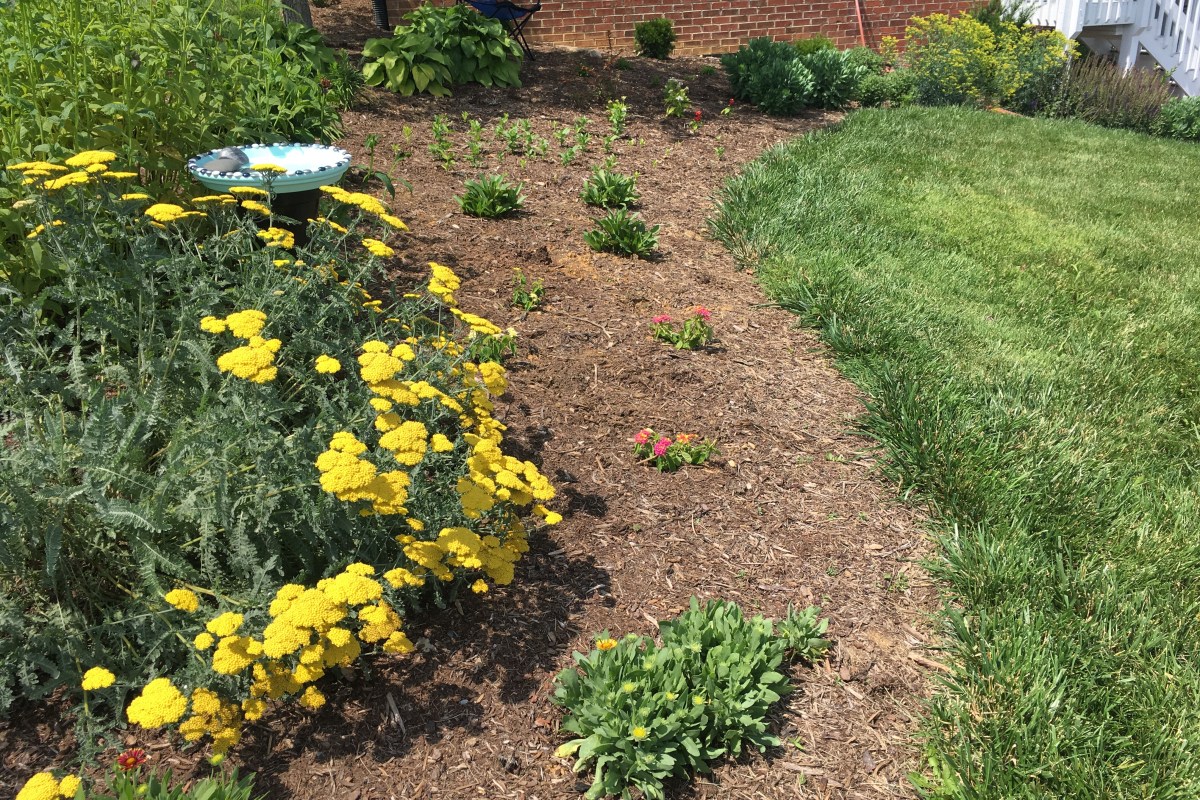
Herb garden needs to fill in
img_2121
Wildflowers from seed mixed with established indigo salvia
IMG_2122
I replinished the flower boxes last week; they had browned pretty badly

Early June: Who’s in the garden and what are the butterflies drinking?

I think we’ve got all the plants in that we are going to put in. I’m sitting under the dogwood tree, reading Donna Tartt’s The Little Friend and watching for butterflies. We were thinking of sailing today, but there was no wind this morning — the flag in the Kroger parking lot lay limp against the pole, completely still — and since this is my only day off this week, we decided to stay home. I’ve been in the garden ever since.

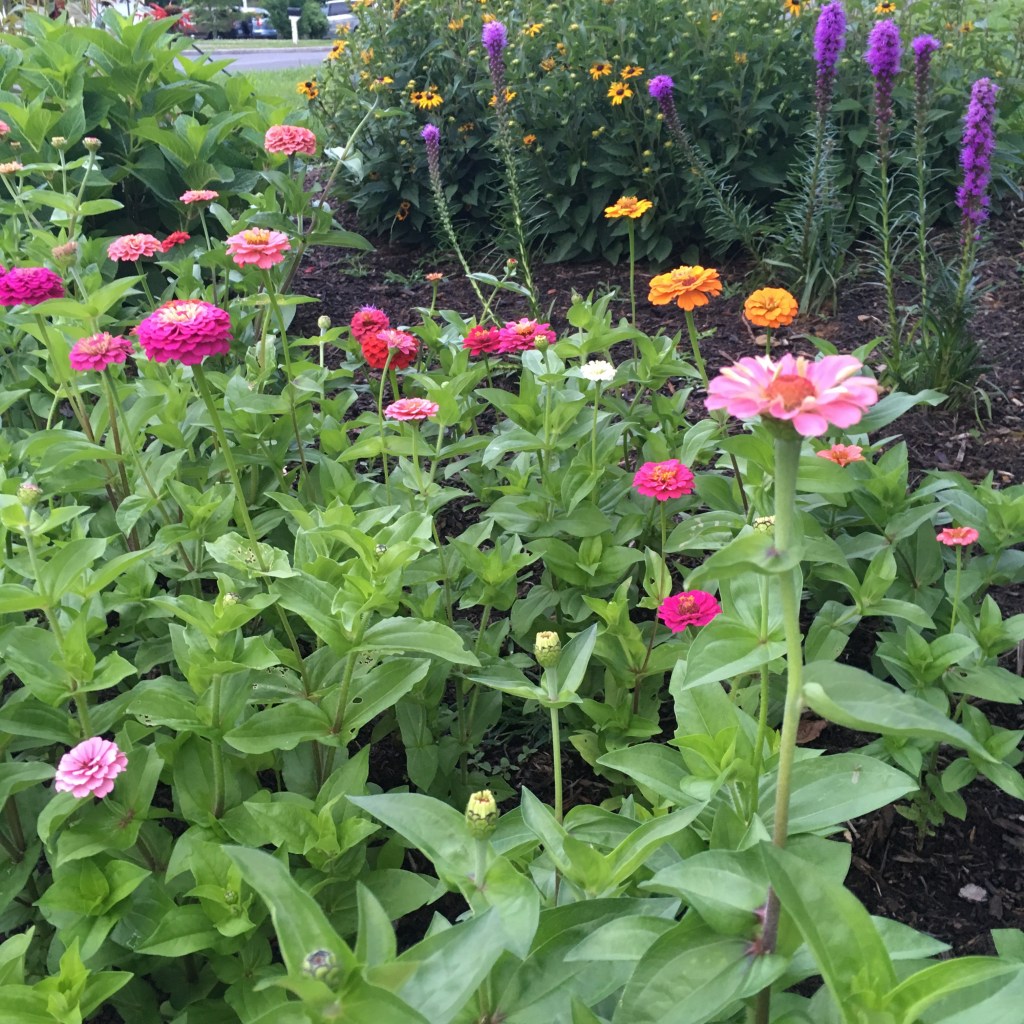
Right now, many things are in bloom: yarrow, bee balm, blanket flower, Lantana, firecracker plant, Pentas, rue, echinacea, guara, Russian sage, roses, creeping thyme, lavender. The indigo salvia has already peaked, as has the regular thyme. The blazing star, milkweed, and zinnias are on the verge of blooming. The Black-eyed Susans and the hydrangea by the stairs are developing buds, and the Joe Pye weed, Shasta daisies, and hydrangea in the dogwood bed show no flowering signs yet.
Who’s around:

  • Bumblebees
  • Honeybees 
  • Wasps
  • Robins
  • Blue jays
  • White butterfly (species unknown)
  • Orange butterfly (species unknown; not a monarch)

As usual, the rue is covered in bees and wasps. We’ve got blue jays and robins hopping around the front yard stretching worms as they pull them from the ground, and today I’ve started seeing butterflies. 

Plants the pollinating insects are visiting:

  • Rue
  • Lantana
  • Yarrow
  • Catmint
  • Yellow milkweed

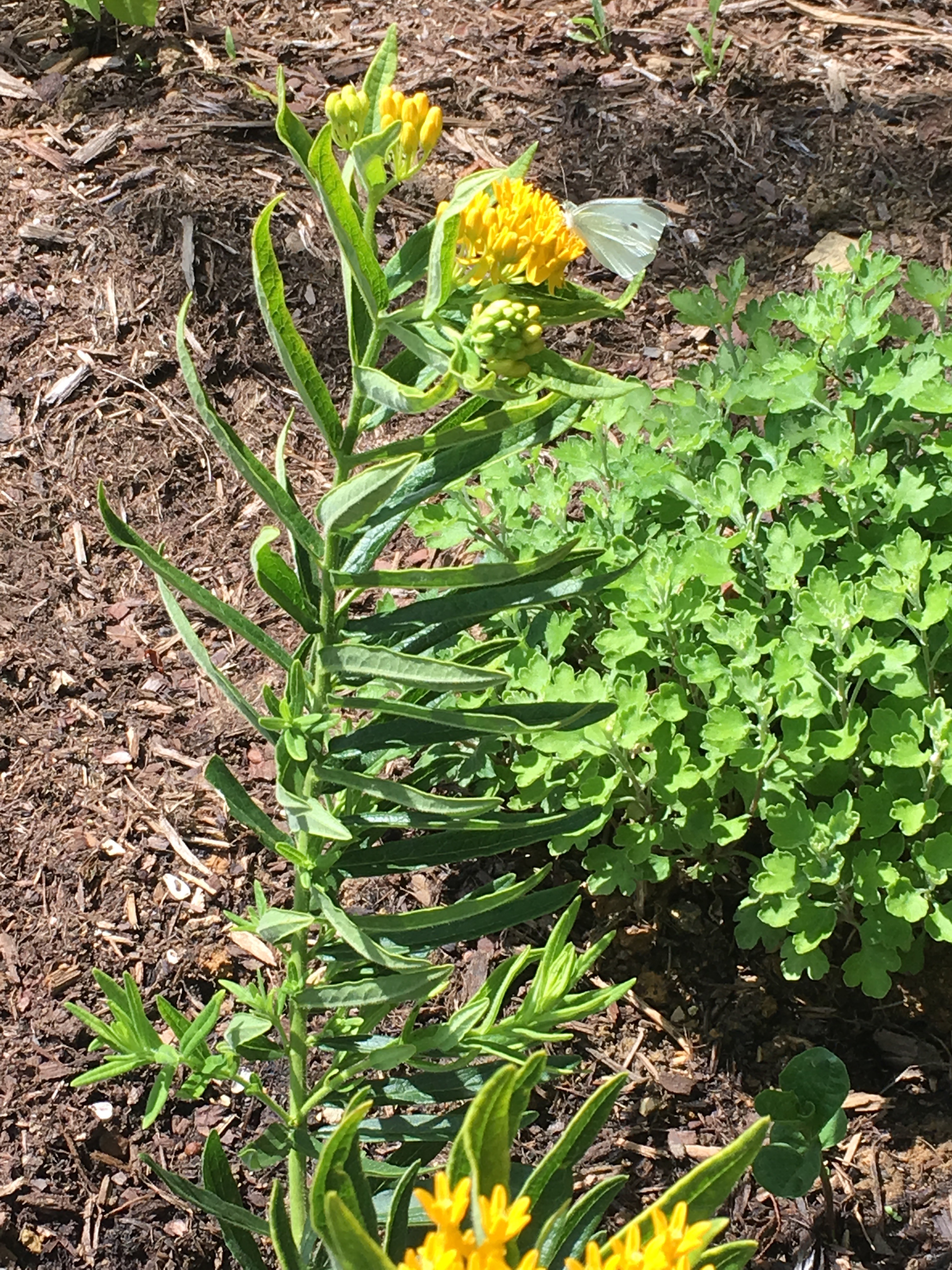
There’s a white butterfly that’s been fluttering around all day — I don’t know what kind it is — and I also saw an orange one stop for a long time to drink from the berrylicious Lantana (or whatever variety the pink and yellow Lantana is called) and then the yarrow. Out back, a white butterfly with a black spot on its wing stopped on the yellow milkweed within a couple of hours of me putting it in the ground.

I haven’t seen any hummingbirds yet this year — maybe it’s early yet. I know they liked the bee balm and the pink salvia last year. I’ve been surprised by the lack of interest in the guara, bee balm, and echinacea so far. The bee balm and echinacea are just starting to bloom, so maybe later in the summer they’ll be more popular.

I haven’t seen any birds or butterflies use the bird bath our daughter made me for Mother’s Day yet, and currently we don’t have any caterpillars that I’m aware of. The rue had a couple of swallowtail caterpillars a week or two ago, but I don’t see any now. I hope the wasps aren’t killing them.

Black moth(?) with white spots on rue

White butterfly with black spot on yellow milkweed